
This is the fifth and final article of a series focusing on the NCWNZ Past Presidents Oral History Project with interviews by Carol Dawber in 2016. See the introductory article in The Circular at "NCWNZ Past Presidents oral history interviews from 2016" (August 2024).
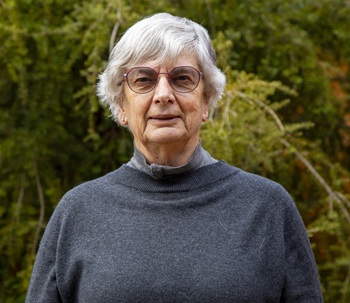 Barbara Joan Arnold née Furness MNZM was President of the National Council of Women of New Zealand from 2012 to 2014. Her contributions reflect a form of leadership that is rarely celebrated but deeply consequential. Over decades of involvement at branch, national, and international levels, Arnold combined scientific expertise, governance capability, and feminist commitment to help sustain the organisation through one of the most difficult periods in its modern history.
Born in Christchurch in 1950, Arnold grew up in a household where civic responsibility was assumed rather than debated. Her father’s involvement in the Labour movement and local government, and her mother’s working life in clerical and accounting roles, shaped an early understanding that women’s participation in public life was both normal and necessary. When Arnold expressed an interest in science, she recalls being encouraged without qualification—her father simply telling her that she could pursue engineering if she wished. That quiet affirmation shaped her expectations of opportunity and equality.
Girl Guides had a formative and enduring impact on her. From Brownies and Guides through to senior leadership roles, Arnold experienced Guiding as a practical training ground for women’s leadership. Over more than twenty years as a Guide leader and trainer, she gained national recognition for her service. Guiding, she reflected, gave women and girls “the opportunity to do non-stereotypical things,” fostering confidence, autonomy, and collective responsibility in ways that strongly aligned with feminist values.
Arnold pursued a Bachelor of Science with honours in zoology and ecology and built a career spanning teaching, environmental education, museum practice, and conservation governance. She worked in roles that bridged scientific knowledge and public engagement, consistently focused on making complex issues accessible. This ability to translate evidence into clear advocacy later became a defining strength in her NCWNZ work.
Her involvement with NCWNZ began in the mid-1980s through the Manawatū Branch, initially as an associate member. She recalls the branch as “the best discussion group in town,” marked by intellectual rigour and respectful debate across political and professional differences. Diversity, Arnold argued, was essential to good advocacy: “The bigger the variety, the more interesting the discussion, and the more information you’ve got to be able to come to some consensus.”
Arnold went on to play a major role in NCWNZ’s policy and submissions work, particularly through the Environment Standing Committee. Drawing on her scientific background, she contributed to submissions on water quality, chemical pollutants, biodiversity protection, marine reserves, and the Resource Management Act. She emphasised the organisation’s disciplined submission process: branch views collated, structured, checked for balance, and grounded in long-standing policy. As she observed, “One of the strengths of belonging to an organisation that’s been around for nearly 120 years is that you’re just another torch-bearer in a long chain.” This continuity, she believed, gave NCWNZ credibility and authority with ministers and officials. She was awarded Member of The New Zealand Order of Merit (MNZM) in 2005 for services to the environment.
Arnold served eleven years on the NCWNZ national Board, including two years as President. Her presidency coincided with one of the most challenging periods in NCWNZ’s history. Funding streams were increasingly uncertain, compliance requirements were tightening, and the organisation’s charitable status was abruptly challenged. The subsequent deregistration by the Charities Commission and the legal battle that followed dominated her term. Arnold described this period as one of “total focus on the court case,” consuming time, energy, and emotional reserves.
One of her most difficult responsibilities was overseeing the disestablishment of staff positions in order to keep the organisation solvent. Arnold later described this as the lowest point of her presidency, recalling the strain of having to “tell staff and follow through” while volunteers worked to keep the office functioning. At times, the survival of NCWNZ itself felt uncertain. Yet she remained determined that the organisation must not fold. Reflecting on her role, she later observed: “I’m not going to be the president that people remember, but I think that what I facilitated… meant the organisation could come out of that really low point and come back up again.”
Throughout this period, Arnold characterised her leadership as facilitative rather than directive. She described herself as “the backroom person,” focused on holding systems together, enabling others to contribute, and maintaining continuity when visibility mattered less than endurance. As president, she believed it was important “not to impose opinions on other people,” allowing consensus to develop through discussion rather than instruction.
Arnold also represented New Zealand internationally, including at meetings of the United Nations Commission on the Status of Women. These experiences reinforced her understanding of how fragile progress can be. “These things that are done with legislation can be taken away overnight,” she warned, reflecting on conversations with women from countries where rights had been rapidly eroded. For Arnold, this underscored the importance of civil society: “That’s the role of NCW… If we stop paying attention, we could lose it.”
Pay equity, parental leave, and women’s participation in non-traditional roles remained enduring concerns throughout her involvement. Arnold distinguished between formal equality and lived reality, noting that “just because it’s established in legislation doesn’t mean it happens.” She cautioned against complacency, particularly among younger generations, urging them to recognise the cumulative impact of caregiving, interrupted careers, and undervalued work. Progress, she argued, depended on persistence: “We’ll keep chipping, pass the banner on to the next generation and let them chip as well.”
After stepping down as president, Arnold found returning to branch life liberating. Freed from the constraints of national neutrality, she could again debate openly and contribute as an individual member. Yet her confidence in NCWNZ’s relevance never wavered. Sexism, she observed, had not disappeared but become more subtle, making collective advocacy as necessary as ever.
Looking back, Arnold measures achievement not in personal recognition but in institutional survival and continuity. NCWNZ endured a period when its future was genuinely at risk and continues to provide a national platform for women’s voices.
As this oral history series concludes, Barbara Arnold’s story reminds us that progress is sustained not only by visible leadership and landmark victories, but by the steady, principled work of those who ensure organisations endure long enough for change to take root.
By
Christie Underwood
~~~~~ ~~~~~ ~~~~~~ ~~~~~~
See also previous articles in this series:
- NCWNZ Past President Elizabeth Bang CNZM (25 October 2025).
- NCWNZ Past President Beryl Anderson ONZM (8 April 2025).
- NCWNZ Past President Barbara Glenie QSO (23 February 2025).
- NCWNZ Past President Janet Hesketh QSM, CNZM (24 September 2024).
To read more articles from The Circular (January-February 2026) issue 655, click on the tag below.