
 |
|
March-April 2026, Issue 656 | Action Hubs | News | GenderEqual NZ | |
Table of Contents
 |
| Suzanne Manning NCWNZ President |
President's kōrero
Salom, Shalom, Nei Hou, Ni hao
The past two months have been a whirlwind of International Women’s Day activities and preparing for the end of the financial year and the annual reporting process. The operational business of focusing on what we have achieved last year is a good reflective process, particularly when it informs our future directions. The Board is continuing to consider our strategic direction and prepare for the transitions ahead.
Last Circular I talked about the organisational value of being courageous. This Circular I would like to reflect on the value that 'inclusivity is the core of our mahi'. NCWNZ has long considered ourselves to be inclusive, that is, welcoming everyone, advocating on behalf of a wide range of women. Yet it is worth examining how well we actually do this. Being inclusive means not just saying we include everyone but going out of our way to make this possible. It means educating ourselves about cultural attributes that differ from our own cultures, finding out about the impacts of different (dis)abilities, considering whether our processes (times, spaces, channels of communication etc.) present barriers to some people. In short, it means mahi – work – on that part of us who are already in NCWNZ to include those who would like to join us.
The Board often gets invitations to represent NCWNZ at various cultural events, and we try to get to them as often as possible. It shows our support for different cultures, and it also helps us educate ourselves about what the important values of different cultures are. I recently attended a Nowruz celebration at Parliament, organised by the Welcome Academy and Iranian Solidarity group, and last year this event was attended by Board members Kerri, Katie, and our then-intern Amandine. Nowruz is the Persian New Year, and the symbols and stories that accompany this celebration were new to me – and yet familiar at the same time because they deal with the same themes of love and acceptance, family and community, remembrance and striving for a better life. The symbolic food platters reminded me of the Seder meal that I was privileged to attend last year as a guest of International Council of Jewish Women President Helene Ritchie. We all have different ways of expressing ourselves, but those similar themes emerge across cultures.
Another recent invitation was from the Hong Kong Federation of Women to attend the Women Power Forum (see Circular article on this). It was an opportunity for Kerri and me to learn more about Chinese culture and hear about their concerns and issues regarding women status and rights. They were very hospitable, which in a Chinese way meant keeping us busy! The pace of life was a noticeable difference, which is a good learning for understanding Chinese women among us.
Working cross-culturally will always have compromise, but to be inclusive we need to ensure the compromises be made by everyone involved (especially those of us already in NCWNZ). To quote Baigali Ochkhuu, President of the International Women’s Federation of Commerce and Industry in Mongolia, and speaker at the Women Power Forum:
'Unity is not uniformity. It is difference moving in the same direction.'
Suzanne Manning
President
Pay equity in New Zealand and international treaties
 In May 2025 the New Zealand Government chose to overturn our formerly world-leading pay equity legislation. The changes had been in the works for nearly a year, and the People's Select Committee on Pay Equity (PSCPE) formed in February 2024 as an organised voice for the communities affected by the law.
Many submitters to the PSCPE reported human rights violations due to both the Equal Pay Amendment Bill’s content and its legislative process. In the report Kei te rapu te iwi: Inquiry into the Equal Pay Amendment Act 2025 (24 February 2026), the PSCPE described breaches of the following international treaties of which New Zealand is a member:
- International Labour Organization (ILO) Convention 100,
- the International Covenant on Civil and Political Rights,
- the International Covenant on Economic and Social Rights,
- Convention for the Elimination of Discrimination Against Women (CEDAW),
- the Convention on the Rights of Persons with Disabilities (CRPD), and
- the Convention on the Elimination of All Forms of Racial Discrimination (CERD).
The PSCPE found that the New Zealand Government indicated no consideration of its international legal commitments under these treaties, and in some cases wilfully and knowingly acted in breach of its international legal commitments. The report's findings relating to each of these international treaty obligations are summarised below.
ILO No. 100 - Equal Remuneration Convention, 1951
New Zealand ratified ILO C100 on 3 June 1983. This Convention requires that members 'ensure the application to all workers of the principle of equal remuneration for men and women workers for work of equal value'.
The Government has acknowledged it does not know whether its changes to the pay equity framework comply with the Convention. This dismantling of what was once seen as world-leading pay equity legislation was raised by the New Zealand Council of Trade Unions (CTU) at the International Labour Organization (ILO) conference in Geneva in June 2025.
International Covenant on Civil and Political Rights (ICCPR)
New Zealand ratified ICCPR in 1978. New Zealand has also ratified the Optional Protocol, allowing individuals and groups to bring complaints to the UN Committee.
As women whose pay equity claims were cancelled or prevented from proceeding under the Act have no effective domestic remedy, the legislation breaches Article 2(3)(a) where a State Party undertakes 'To ensure that any person whose rights or freedoms … are violated shall have an effective remedy, notwithstanding that the violation has been committed by persons acting in an official capacity.'
Article 25 stipulates that 'Every citizen shall have the right and the opportunity,
without any of the distinctions mentioned in article 2 and without unreasonable restrictions: (a) To take part in the conduct of public affairs, directly or through freely chosen representatives.' This is also breached. There was no prior consultation with the Ministry for Women, nor with any major women’s civil society groups or NGOs, or with trade unions.
Potentially both Article 3 and Article 26 have been breached. Article 3 commits New Zealand 'to ensure the equal right of men and women to the enjoyment of all civil and political rights set forth in the present Covenant.' Article 26 promises 'All persons are equal before the law and are entitled without any discrimination to the equal protection of the law. In this respect, the law shall prohibit any discrimination and guarantee to all persons equal and effective protection against discrimination on any ground such as race, colour, sex, language, religion, political or other opinion, national or social origin, property, birth, or other status.'
International Covenant on Economic, Social and Cultural Rights
(CESCR)
New Zealand ratified CESCR in 1978. Article 2(1) of CESCR provides that a State Party 'undertakes to take steps, … to the maximum of its available resources, with a view to achieving progressively the full realization of the rights recognized in the present Covenant'. This means that once a treaty member has implemented a certain level of protection for these rights, it should not take steps to diminish or undo this progress.
Convention for the Elimination of Discrimination Against Women
(CEDAW)
New Zealand ratified CEDAW in 1985. New Zealand has also ratified the Optional Protocol, allowing individuals and groups to bring complaints to the UN Committee.
CEDAW Article 2(d) requires the State 'To refrain from engaging in any act or practice of discrimination against women and to ensure that public authorities and institutions shall act in conformity with this obligation'. This is breached because the Government actively curtailed women’s rights through legislation.
Also, Article 2(c) requires States 'To establish legal protection of the rights of women on an equal basis with men and to ensure through competent national tribunals and other public institutions the effective protection of women against any act of discrimination'. The Equal Pay Amendment Act 2025 does the opposite by removing legal protection, eliminating access to tribunals, and ensuring ineffective protection. CEDAW's Committee has consistently emphasised that formal equality is insufficient. Member states must ensure substantive equality through concrete measures (see General Recommendation No. 25, Article 4, paragraph 1).
Article 11(1)(d) guarantees women’s right to equal remuneration for work of equal value. This is breached because the Equal Pay Amendment Act 2025 removes or delays pay equity claims and denies effective remedies to women whose work is undervalued. Several groups are exploring the use of the complaints mechanism under the CEDAW Optional Protocol, especially for claimants who have now exhausted domestic remedies.
Convention on the Rights of Persons with Disabilities (CRPD)
New Zealand ratified CRPD in 2008. New Zealand has also ratified the Optional Protocol, allowing individuals and groups to bring complaints to the UN Committee. CRPD reinforces the principle that persons with disabilities must enjoy the same rights to work, fair pay, and equal opportunity as others, without discrimination. The relevant articles are:
- Article 5 – Equality and non-discrimination
- Article 16 – Freedom from exploitation, violence, and abuse
- Article 19 – Living independently and being included in the community.
- Article 27 – Work and employment
Stricter thresholds and comparator rules may disproportionately disadvantage disabled workers, who are often concentrated in sectors with few valid comparators. By restricting or terminating pay equity claims, the Act may leave some disabled workers without any legal pathway to challenge undervaluation, undermining access to justice obligations.
The Act fails to address workplace adjustments or differential costs that affect work value assessments. Applying a uniform comparator model risks undervaluing adjusted roles, conflicting with the CRPD duty to provide reasonable accommodation. The CRPD requires disaggregated data to track disability equity. If claims are excluded or discontinued, monitoring pay equity outcomes for disabled workers becomes difficult.
Convention on the Elimination of All Forms of Racial Discrimination
(CERD)
New Zealand ratified CERD in 1972. New Zealand has not ratified the Optional Protocol, allowing individuals and groups to bring complaints to the UN Committee. Article 5 requires that States Parties undertake to prohibit and to eliminate racial discrimination in all its forms and to guarantee the right of everyone, without distinction as to race, colour, or national or ethnic origin, to equality before the law. Article 5(d)(i) specifies 'The rights to work, to free choice of employment, to just and favourable conditions of work, to protection against unemployment, to equal pay for equal work, to just and favourable remuneration.'
Sustainable Development Goals (SDGs)
In addition to breaches of the above international treaties, the Equal Pay Amendment Act 2025 is inconsistent with the following Sustainable Development Goals outlined by the UN's Department of Economic and Social Affairs:
- SDG 5 – Gender Equality (Targets 5.1, 5.4, 5.5)
The Act terminated 33 active pay equity claims and raised thresholds for initiating new ones. The loss of access to remedies undermines New Zealand’s obligations to ensure equal pay for work of equal value and women’s full participation in economic life. - SDG 8 – Decent Work and Economic Growth (Targets 8.5, 8.8)
By restricting access to fair pay processes, the Act weakens labour protections and the right to pursue equitable remuneration. - SDG 10 – Reduced Inequalities (Targets 10.2, 10.3)
Because gender pay inequities intersect with ethnicity, the impact falls
disproportionately on Māori and Pacific women. The removal of mechanisms to correct pay disparities risks widening both gender and ethnic pay gaps, directly conflicting with the SDG goal of empowering all and reducing inequalities within societies. - SDG 16 – Peace, Justice, and Strong Institutions (Targets 16.6, 16.b)
The Bill’s use of urgency, limited consultation, and retroactive cancellation of claims has raised concerns about transparency, procedural fairness, and accountability.
Universal Periodic Review (UPR)
The UN's Human Rights Council calls for each UN Member State to undergo a peer review of its human rights records every 4.5 years in a Universal Periodic Review (UPR). New Zealand’s next UPR cycle takes place in 2029.
We expect that there will be questions about the rollback of women’s pay equity rights, highlighting the CEDAW and ILO breaches in particular. We anticipate that the UN will urge New Zealand to reinstate effective pay equity mechanisms.
By
Beryl Anderson, NCWNZ International Action Hub
Women Power Forum 2026 in Hong Kong
NCWNZ was invited and funded to attend the Women Power Forum by the Hong Kong Federation of Women (HKFW). Suzanne Manning and Kerri Du Pont represented NCWNZ at this Forum which was held on 1-2 April 2026.
The Women Power Forum is a biennial event organized by the HKFW and the Golden Bauhinia Women Entrepreneur Association. It focused on women’s empowerment, bringing together leaders from different sectors in Hong Kong, China, and internationally for networking and sharing ideas. This was the 4th Forum, the first one being in 2019.
The Forum itself was a half day of continuous speakers, with the overarching theme of 'Women across nations: Unite to prosper' and focusing on areas of business, technology and social innovation, and arts and culture. Digital technology, and a focus on empowering individual women in business seemed to predominate. There was a wide range of speakers, including government ministers, business leaders, philanthropists, Olympic athletes, leadership coach, scientist, and social innovators. They were honoured to have as a speaker Huang Xiaowei, a top ranking Chinese official.
After the half-day Forum, an extended one-and-a-half-day programme of visits allowed ongoing networking particularly with the organisers and the international visiting delegations. We met women from Singapore, Malaysia, Thailand, Mongolia, Cananda and Hungary, among others. Many business cards were exchanged!
The HKFW is a similar organisation to ours in terms of membership and purpose. They have around 2,000 individuals and 89 organisations as members, and they are engaged in education, welfare, connecting across organisations and participation in international conferences and forums. Their founding President, Peggy Lam, was instrumental in the campaign to include Hong Kong in CEDAW. We met Peggy – at 98 she is still a force to be reckoned with.
One of the groups we learned about was The Golden Bauhinia Women Entrepreneur Association. Golden Bauhinia as an organisation is more specific, focused on women entrepreneurs, and is probably more akin to Business and Professional Women (BPW). In fact, there were people representing BPW from Singapore (and possibly other places) at the Forum.
The NCWNZ Board will now be considering how to make best strategic use of this unexpected opportunity in the future.
By
Suzanne Manning
The International Covenant on Civil and Political Rights (ICCPR)
This article is the third in a series for The Circular by the members of the NCWNZ International Action Hub. The series highlights the many different international treaties to which New Zealand is a signatory and how this impacts women and girls.
The International Covenant on Civil and Political Rights (ICCPR) is one of the core international human rights treaties adopted by the United Nations in 1966. It sets out fundamental civil and political rights that all people are entitled to, simply by virtue of being human. New Zealand ratified the ICCPR in 1978, meaning our government has committed to uphold and protect these rights in law, policy, and practice.
For women and girls in Aotearoa, the Covenant is not abstract. It provides a powerful framework for equality, safety, and participation. Countries that have ratified the Covenant must report regularly to the UN Human Rights Committee on how they are implementing it.
Civil society organisations, including women’s groups, can also submit 'shadow reports' to highlight gaps between law and lived reality. This creates an important accountability mechanism.
The Covenant protects a wide range of civil and political freedoms. Key rights include:
- The right to life
- Freedom from Torture and cruel inhuman or degrading treatment
- Freedom from discrimination
- Equality before the law
- Freedom of expression, assembly and association
- Political participation
While New Zealand has strong human rights frameworks, rights are not self-executing. They require vigilance. The following issues, for example, all intersect with rights protected under the ICCPR:
- Gender-based violence
- Pay equity and economic justice
- Online safety
- Overrepresentation of wāhine Māori in the justice system
- Barriers to political participation
The Covenant reminds us that civil and political rights are not optional or secondary — they are binding commitments.
The Federation of Business and Professional Women of New Zealand (BPW NZ) is chiefly concerned with advancing economic and workplace equality for women, holding government policies to account through advocacy and submissions, and empowering women’s leadership and professional growth. Their work spans local policy issues through to international human-rights engagement, with a strong emphasis on the economic justice and structural barriers women face in Aotearoa.
Right now, BPW NZ is reporting and advocating on issues that connect strongly to core ICCPR obligations:
-
Pay equity reform and access to effective remedies, including responses to recent law changes that could limit women’s ability to seek redress for discrimination. The organisation has publicly criticised government decisions that halted or made it harder to pursue pay equity claims, calling them 'detrimental to women' and a 'step backwards' for workplace equality. BPW NZ doesn’t just talk about gender pay inequality — it actively challenges policy decisions that weaken the legal tools
women have to seek fair pay. - Engagement with New Zealand’s ICCPR State Report process, which offers an opportunity for civil society voices (including BPW NZ) to shape how the country’s human rights record is presented to the UN.
-
Legislative submissions that challenge laws or proposals with potential
discriminatory impacts, advocating for gender impact analysis and accountability. BPW NZ made a detailed submission on the Regulatory Standards Bill, arguing that the proposed law did not require gender impact analysis and could weaken accountability mechanisms that protect women’s rights. - Intersectional advocacy that highlights how gender and racial discrimination intersect, aligning with ICCPR principles of equality before the law. BPW NZ is actively preparing submissions for the UN Committee on the Elimination of Racial Discrimination (CERD) periodic review, calling out entrenched racial disparities that disproportionately affect women, especially Māori, Pasifika, Asian, and migrant women. These concerns connect with ICCPR commitments to non-discrimination and equality before the law.
The ICCPR is not simply a treaty New Zealand signed nearly fifty years ago. It is a living commitment — one that must be measured not only by legislation on paper, but by the everyday realities of women and girls across Aotearoa.
For organisations like BPW NZ, and for NCWNZ members more broadly, the Covenant provides both a framework and a responsibility. It reminds us that economic justice is inseparable from civil and political rights. That equality before the law must translate into effective remedies. That freedom of expression and participation must include women’s voices at every decision-making table. And that non-discrimination is not aspirational — it is binding.
The ICCPR calls on governments to act. It also calls on us to hold them to that
promise. In doing so, we strengthen not only women’s rights, but the integrity of our democracy itself.
By
Sherryll Markie-Brookes
Vice President Issues, BPW NZ
and member of NCWNZ International Action Hub
~~~~ ~~~~
See the other articles in this series here:
- 'Convention Against Torture & Other Cruel, Inhuman or Degrading Treatment or Punishment,' by Megan Hutching (August 29, 2025). https://www.ncwnz.org.nz/convention_against_torture
- 'New Zealand women and the Polyglot Petition,' by Randolph Hollingsworth (27 October 2025). https://www.ncwnz.org.nz/new_zealand_women_and_the_polyglot_petition
Milestones: The UN World Conferences on Women
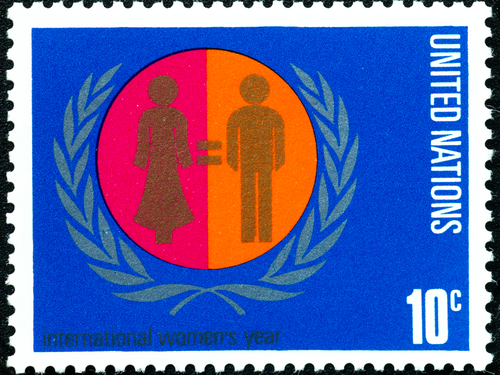 In the midst of the Cold War and the horrific conflicts occurring throughout Asia and Africa coping with the decolonisation efforts of the 1960s and 1970s, the United Nations Commission on the Status of Women succeeded in crafting the Declaration on the Elimination of Discrimination Against Women in 1967. In 1972 the United Nations proclaimed 1975 as the International Women's Year - and the CSW began working on the organisational structures to assure the creation of CEDAW, a legally binding treaty, at the Convention level, to oversee the Elimination of Discrimination Against Women. What followed was the massive work by the UN and NGO representatives to organise four world conferences on women: Mexico City in 1975, Copenhagen in 1980, Nairobi in 1985 and Beijing in 1995.
A powerful report on this topic by Stephanie Oula, Sia Nowrojee, and Mayra Buvinic, The United Nations and the Global Women's Movement: Learning from the Past, Looking to the Future (UN Foundation, 2025), is available for download here.
This series of milestone events and more information can be gathered from the report's accompanying website: Where the Future was Built: The Story of the UN World Conferences on Women, https://www.wherethefuturewasbuilt.org/.
1975
The first UN World Conference on Women occurred in Mexico City 19 June - 2 July 1975. Delegates were joined by thousands of activists in women's rights from 133 countries. 113 (73%) of the 133 delegation leaders were women. The program included data gathered from UN member states that for the first time specifically separated data by sex. Two documents were adopted from the conference proceedings, the World Plan of Action and the Declaration of Mexico on the Equality of Women and Their Contribution to Development and Peace.
1980
The second UN World Conference on Women happened at the midpoint of the UN Decade for Women (1976-1975). While the conference in Mexico City had primarily served for consciousness raising, Copenhagen was where important networks were created and feminist research advanced. This conference took place July 14-30, 1980, in Copenhagen, Denmark. During the opening ceremony, the organisers offered the formal signing of the Convention on the Elimination of All Forms of Discrimination Against Women (CEDAW). The conference adopted a World Programme of Action (despite opposition from Australia, Canada, Israel and the U.S.) which included sections on creating women's bureaus. It also defined the roles of NGO organisations - this conference attracted 8000 NGO members - compared to 6000 at Mexico City. The Programme also established target issues that member states were to monitor.
1985
The third UN World Conference on Women took place 15-26 July 1985 in Nairobi, Kenya. Even though lesbian groups had been part of the earlier conferences, this was the first United Nations official meeting in which lesbian rights were formally presented. There were 157 countries represented. The attendees argued that the objectives of the UN Decade for Women had not achieved the goals set out in 1975. They convinced the United Nations General Assembly to conduct world surveys on women every five years in a continuing effort to follow-up on the implementation of the members' strategies for women's rights. For many, this conference served as the 'birthplace of global feminism' since in the early 1990s feminists gained visibility and shaped debates on women's issues at UN conferences.
1995
 The fourth UN Conference on Women took place 4-15 September 1995 in Beijing, China. The conference included representatives of 189 governments; and in addition to the 17,000 participants registered for the conference, an additional 30,000 activists attended the Forum. A crucial outcome for this conference was The Beijing Declaration and Platform for Action. Here the UN and its member states asserted 'women's rights as human rights.' Another important result of the conference was the Beijing Declaration of Indigenous Women, signed at the NGO Forum in the Indigenous Women's Tent. (Read more on this in the report prepared by the Ontario Native Women's Association, Thirty Years After the Beijing Declaration of Indigenous Women, March 2025.)
While the UN has not organised any further World Conferences on Women, there have been periodic reviews of the Beijing Platform for Action. These reviews and appraisals occur every five years, during the regular sessions of the Commission on the Status of Women (CSW). The thirty-year review Beijing+30 served as a highlight to the 69th session of the CSW. More details on this will be forthcoming.
He taonga
The Board recently had the Te Rōpū Wāhine Māori Toko I Te Ora | Māori Women’s Welfare League (MWWL) brooch repaired. The clasp was loose and the safety chain was broken, and therefore in danger of being lost when worn. As a tohu – a symbol – of the long-standing relationship between the MWWL and NCWNZ, this was a risk the Board did not want to take. Thank you to Jubilee Jewellers in Wellington for doing this work.
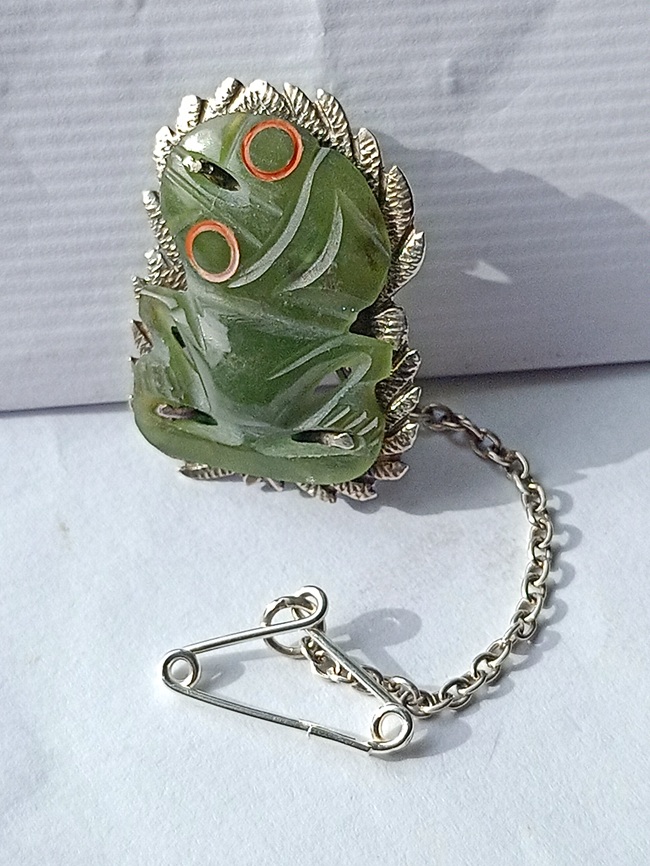
Dorothy Page’s Centennial History of NCWNZ tells the story of this relationship in its early days. The MWWL held its first conference in 1951, and the NCWNZ President Flora Forde attended. Subsequently the NCWNZ President Rachel Cumberbeach attended the 1955 conference, and the MWWL President, Dame Whina Cooper ONZ DBE, attended the NCWNZ conference in that same year. It was at that 1955 NCWNZ conference that President Cooper presented the silver-mounted pounamu brooch as a tohu of the relationship between our organisations.
This brooch is still passed from President to President to be cared for during her term of office.
Some of what's happening at local branches
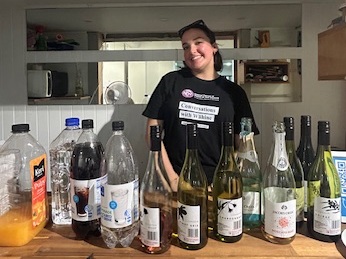
To honour International Women's Day, Manukau Branch held an interactive stall at Papakura Community Parkfest Day on 7th March where we asked everyone we spoke with “What is your wish for the future of women in Aotearoa New Zealand?
The conversations were enlightening and fulfilling with a good number of responses submitted in writing. they can be summarised in these three individual comments received:
- Balance for all aspects of life - family, work, community.
- To feel safe in their own power, to feel equally with men.
- I wish for equal treatment and pay.
There is nothing quite as fulfilling as speaking with women you have never met before to know how important the work of National Council of Women of New Zealand is for future generations of women to come.
 |
| Photo supplied by Angela Dalton: (l-r) Judi Goldsworthy, Angela Dalton, Iunisi Vaitohi of the Manukau Branch of NCWNZ |
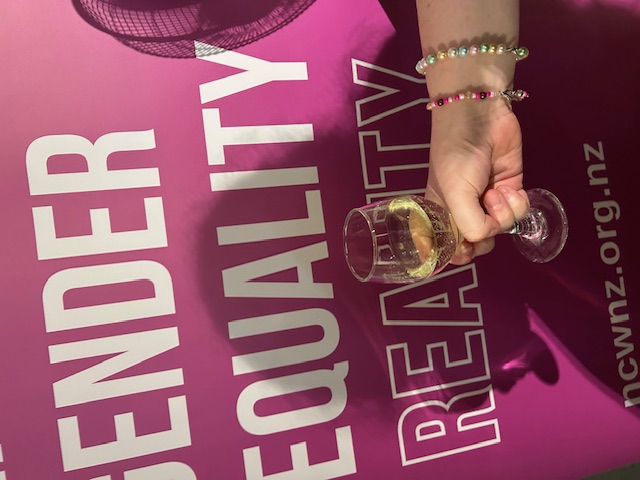
 Our recent beading night brought together 44 people for a sold-out, feel-good Friday evening. With a table full of colourful beads there were endless options for creating creative jewelry.
The atmosphere quickly became lively, with people chatting, laughing, and comparing designs as they worked on their jewellery. We added a light touch with a few beading facts displayed around the room, highlighting how beadwork is used in different cultures worldwide. They were there for anyone interested, without taking away from the relaxed, social feel of the night.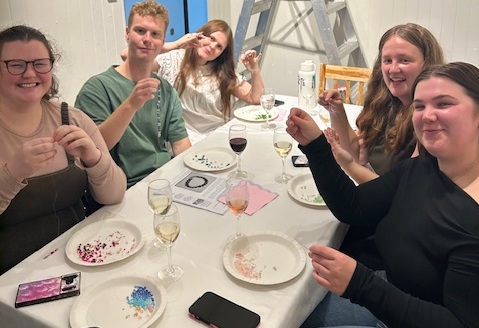
Some of these included how Indigenous communities in North America use beadwork as a way of telling stories and preserving identity. For example, projects like Every One by Cannupa Hanska Luger use handmade beads to represent lives affected by the Missing and Murdered Indigenous People crisis.
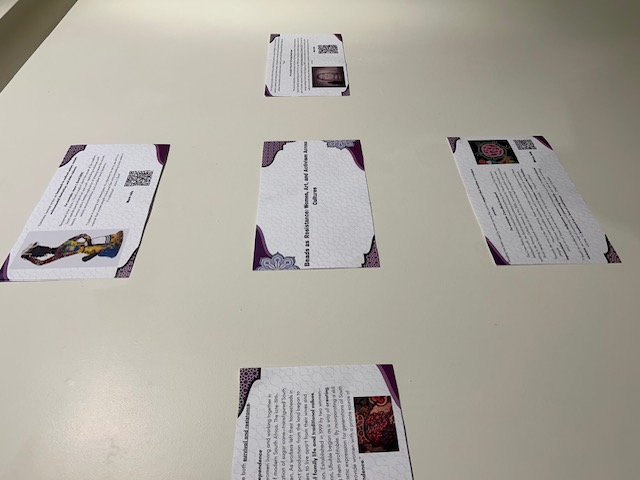
We also touched on beadwork traditions in South Africa, where women’s collectives like the artists of Ubuhle have used beading to create income and independence. The Cree-Métis women, known as the flower beadwork people, historically combined cultural design with practical ways to support their families.
Together, these small insights added an extra layer of meaning for those who stopped to read them.
By the end, everyone left with something they’d made and hopefully a shared sense of having spent the evening well!
By
Sarah Calley, Vice-President, NCWNZ Wellington Branch
NCWNZ Action Hubs
 The Health Action Hub held its bimonthly meeting on 22 April, focusing on housing and homelessness. Jenny Ombler, Research Fellow at the New Zealand Centre for Sustainable Cities and He Kāinga Oranga/Housing and Health Research Programme, presented her research on ending homelessness in Aotearoa. Her presentation was followed by a discussion with members on the gendered dimensions of homelessness, the factors contributing to women’s housing insecurity, and the challenges of finding effective solutions.
The Hub recently made a submission, led by Nicky Newton, to a UN Committee on violence against older women. We appreciate the responses from members and organisations, which enabled Nicky to identify key issues affecting older women and to make recommendations for international consideration.
The Action Hub continues to advance work across three priority areas:
- Health, safety and wellbeing policy and submissions
- Women’s reproductive and maternal health
- Eliminating violence against all women and girls
These broad priorities and areas of focus guide our advocacy to ensure women’s voices are represented in policy development and are heard by Government, media, civil society leaders and communities.
The Hub is supported by a dedicated committee, and we want to expand and strengthen our capacity and capabilities. We welcome expressions of interest from members who have skills in administration, communication, policy analysis, or related areas, who are committed to advancing health and wellbeing outcomes for women’s and girls in Aotearoa.
Those interested in contributing to the Hub’s activities are encouraged to get in touch: [email protected]
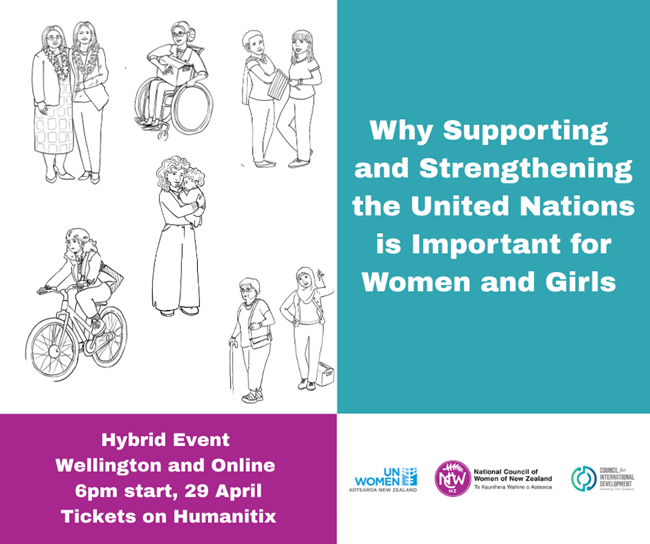
The rights of women and girls are under attack globally. The International Action Hub offers a timely event on April 29th 6 p.m. to explore what role the UN has, can and should play to enable gender equality. Expect the conversation to traverse topics like treaties and the SDGs, humanitarian support, women’s health, education and employment equity, and climate change. It’s an opportunity to collectively start reimagining the future while reflecting on the past - Ka mua, ka muri. The International Action Hub is teaming up again with the Council of International Development and UN Women Aotearoa New Zealand to hold this stellar event. Susie Ferguson and Tylah Farani-Watene are co-chairs for a panel of esteemed leaders including Jackie Edmond (Sexual Wellbeing Aotearoa) and Dr. Gill Greer (Amnesty International).
This is a hybrid event - with tickets to attend in person in Wellington (get in quick!) or online. Get tickets here: https://events.humanitix.com/women-and-the-united-nations.

What Happened in 2025?
2025 was a busy and impactful year for the International Action Hub - with key highlights including:
-
Organising the third Women at the Table on Climate Change event in May 2025, in partnership with the Council of International Development and UN Women Aotearoa New Zealand. This was a hybrid event chaired by Madison Walker CEO UN Women NZ and Eva Hartshorn-Sanders, convenor of the International Action Hub of NCWNZ (we stepped in at the last minute as Nanaia Mahuta was attending the tangi of a close friend). The focus of the third event was to understand a business, union and philanthropy approach to climate action (following two earlier events that had focused on government / politics and international frameworks, and NGO work). Speakers included:
- Cheryl Spain, CEO of the Gift Trust
- Jo Tyndall, Director of the Environment Directorate, OECD
- Elly Rosita Silaban, President of KSBSI (the Indonesian Workers’ Welfare Union)
- Ella Tunnicliffe-Glass, Senior Manager Sustainability Strategy, Fonterra
- Katie Beith, Head of ESG at Forsyth Barr
You can watch the YouTube recording of this event here.
-
Running the Online Safety Coalition, which has included:
- Supporting the written and oral submissions, particularly on the stalking legislation and the Select Committee Inquiry into the harm young New Zealanders encounter online, and the roles that Government, business, and society should play in addressing those harms. You can read NCWNZ’s written submission to the Education and Workforce Committee (30 July 2025, download the .pdf file here).
- Speaking to external groups about online safety - such as at the launch of Tiaki’s new resource centre in Porirua.
- Speaking to politicians about online safety and law reform options.
- Eva spoke at the launch of Reuben Davidson, MP’s proposed Members’ Bill, which has adopted policy priorities and concepts from the Online Safety Coalition. This Bill is still in the ballot, but it could be progressed at any point if pulled from the Member’s Bill via the Lottery system or if over half of MPs in Parliament agreed to introduce the Bill.
The majority of the Select Committee (referred to above) has also recommended policy priorities proposed by the Coalition - stronger in the case of the Labour Party members of the Committee. You can read their final report released last year on the Amnesty International website, No Harmware. Achieving bipartisan support is a significant milestone, but there’s a need to ensure that the government accepts the recommendations and turns this into law.
We have also been supporting the development of a new campaign to encourage key MPs and Ministers to adopt these changes - focused on platform transparency and accountability. Eva will email out an action item to branches and hubs, and you can read more and take action as individuals or organisations, using the No Harmware Action Toolkit available for download here.
-
We organised two “Women, Technology, Privacy and Safety” webinars - focused on privacy issues with fertility/menstruation apps, and priority law reform.
-
Beryl Anderson has led a stellar effort on CEDAW and the NGO response. This included coordinating and supporting the drafting of NCWNZ’s submission on CEDAW, and providing distant support to the presenters in Geneva. Suzanne Manning and Beryl Anderson, accepted the invite to travel to the Cook Islands, where they attended the Cook Islands National Council of Women (CINCW) biennial meeting in Rarotonga on 3-5 March 2025: Uikaraurau: Konitara Vainetini o Te Kuki Airani. On the final day, a CEDAW information gathering workshop was facilitated by Suzanne, Beryl and Ruta Pokura-Matai (the writer of the CINCW NGO report).
-
We partnered with Philanthropy New Zealand to host a webinar where Jan Logie interviewed Dame Ranjna Patel about her work, philanthropy and life, following her recognition in the King’s Birthday Honours. This event was Suman Kapoor’s idea and she also spoke at the event. You can watch the recording of 'A Conversation with Dame Ranjna Patel,' on Youtube here.
-
The hub has also been supporting the delegation at CSW69 and CSW70, particularly through Christine King’s work at Aotearoa Women’s Watch.
-
We have also been supporting the development of a new National Action Plan on Women, Peace and Security, including attending a meeting with NGOs at MFAT in 2025.
- Early in 2026, the Hub wrote a letter to the Prime Minister about the importance of supporting and strengthening the UN rather than joining Trump’s ad hoc Board of Peace. This effort was led by Megan Hutching with support from the hub, particularly Randolph Hollingsworth.
- Submitting on the Ministry for Women’s Long-term Insights Briefing - Free to Lead.
So where to next in 2026?
As a NCWNZ Action Hub, we went through a strategic review process, which included a short survey to work out the areas the people enjoyed, thought we should prioritise, who we should work with and time availability. We then discussed these results and current issues as a hub. As a result, the Hub has decided to continue and extend many of the initiatives outlined above, including:
- Online safety coalition and associated work - including the campaign
- CEDAW - including a youth event this year in partnership with youth organisations (focused on raising awareness and the concluding observations). We spoke to YWCA Wellington about this - so watch this space for more details.
- Raising awareness about how non-CEDAW international treaties impact on / intersect with the rights of women and girls - we've been taking turns writing articles in the Circular as part of this programme of work, this is capacity-building for the hub too. You can read the latest article from Beryl on pay equity and international treaties in this issue of The Circular.
- Following on from our letter to the PM about the importance of supporting and strengthening the UN we are partnering with UN Women Aotearoa and the Council of International Development to hold a hybrid event on this topic on 29 April: Online and Wellington tickets available via Humanitix here.
- Supporting groups and mahi at CSW.
- Submitting on the final version of the Ministry for Women’s Long-term Insights Briefing - Free to Lead.
- Supporting the progress and implementation of the Women, Peace and Security Action Plan (MFAT).
- We are also looking at holding another event on foreign affairs issues with political spokespeople during the election period.
We’d love to have you join us in this mahi. If you are a NCWNZ member and want to join the International Action Hub - reach out via [email protected].
New name, same responsibilities. The request from the Board for a new name for the Parliamentary Watch Committee (PWC) wasn't straightforward. The team played around with variations that honoured the legacy name but the acronym got longer and the purpose no clearer for those outside NCWNZ. So, we suggested the Submission Coordination Committee, which is about as clear as it gets. The end-to-end coordination of NCWNZ submissions to parliament, government and other organisations to inform and influence law and policy.
If you're new to the submissions process or want a refresh, put a placeholder in your calendar for May 27th 7.30-8.30pm. The Submissions team will take you through the NCW way.
We have welcomed our newest member onto the team. Zsarina Lovett is a member in the Whanganui Branch catchment. Her focus is on disability and caregiving systems, ACC decision-making, and how responsibility is often shifted onto individuals when systems create constraint.
Thank you to all those who have contributed to the four submissions completed so far this calendar year. These can be accessed publicly on the website Submissions - National Council of Women of New Zealand or by members on our new knowledge platform Gitbook (details to come from the communications team).
Julie, Bernice, Nicky, Riikka and Zsarina
The Health Select Committee has now reported back on the Improving Arrangements for Surrogacy Bill. Overall, the Bill represents a significant improvement, and many of NCWNZ’s concerns, outlined in our submission on 16 September 2024 (.pdf file, S24.15, on the NCWNZ website), have been addressed in some form. In particular, the strengthening of the rights and interests of children born through surrogacy is welcome. However, protections for surrogate mothers have been addressed less comprehensively.
Below is a series of topics that need further attention.
1. Primacy of the child’s interests
NCWNZ recommended amending the HART Act 2004 to explicitly state that the child’s interests are paramount. While this was not adopted directly, the Committee strengthened child‑centred safeguards, including:
- mandatory Oranga Tamariki reports for all surrogacy approval applications;
- expanded ECART powers to cancel approvals where conditions are not met;
- confirmation that courts must consider the Verona Principles when determining the child’s best interests; and,
- amendments to citizenship law to ensure surrogate‑born children retain New Zealand citizenship by birth.
2. Use of the term 'surrogate mother'
NCWNZ recommended consistent use of the term 'surrogate mother' to properly reflect women’s reproductive rights, health and wellbeing, and power imbalances. This recommendation was not addressed.
3. Representation of surrogate mothers
NCWNZ sought representation for surrogate mothers on ECART and related committees. While the Bill now requires at least two members to advocate for the child, it does not provide for advocacy for surrogate mothers.
4. Cultural and disability perspectives
NCWNZ recommended the inclusion or co‑option of expertise where surrogacy involves Pasifika peoples, other non‑European cultures, or disability. This was not addressed, which is disappointing.
5. Traditional surrogacy arrangements
The Committee partially addressed NCWNZ’s recommendation that parties to traditional surrogacy arrangements be encouraged to enter into Surrogacy Arrangements and participate in the ECART approval process. A new provision requires ECART approval for all clinic‑assisted traditional surrogacy arrangements and allows such arrangements to apply directly to ECART, rather than through a clinic.
6. Incest laws and surrogate‑born children
NCWNZ recommended that children born through surrogacy be subject to the same incest laws as set out in the Crimes Act 1961. The Committee was divided and ultimately adopted stricter provisions, extending prohibited familial relationships to include those that existed before, and resulted from, parentage transfer. This would prevent a surrogate‑born person from entering into a marriage or civil union with the surrogate or members of the surrogate’s family, even when they are not genetically linked and were raised in different families. Whether the Committee has got the issues of power imbalances and the integrity of the family unit right is likely to be debated further.
7. Protection of surrogate mothers
The Bill strengthens some protections for surrogate mothers, including enforceable reimbursement of reasonable costs and clarification of tax treatment. However, paid parental leave remains unresolved. The Committee viewed the current entitlement of 26 weeks for both the surrogate mother and adoptive parent as 'double dipping' and suggested an alternative model of 14 weeks for recovery and 14 weeks for bonding. This issue will require further consideration.
8. Registers, consent, and remaining gaps
The Committee did not support the establishment of a national register but introduced new requirements for the Registrar‑General to record identity information alongside, but not on, the birth record of a surrogate‑born child. This includes details about the nature of the relationship between the surrogate and the intended parents, and requires the
Registrar‑General to provide access to this information if requested by the surrogate‑born person.
The Committee did not support a specific mechanism for proactively alerting surrogate‑born people to the existence of their surrogacy information. Instead, when providing birth information, the Registrar‑General must notify the person that restricted surrogacy information exists and explain how it can be accessed.
9. Sufficient time for surrogate mothers to (re)consider consent
Protections for surrogate mothers have been strengthened through the introduction of a standard statutory declaration form, to be witnessed by an independent lawyer. Consent will not be valid if given before the child is seven days old, and the lawyer must certify that the implications of consent have been explained.
10. Other outstanding issues
Several NCWNZ recommendations were not addressed or only partially addressed, including:
- equal rights of access to information for surrogate mothers (not addressed and remains a serious flaw in the Bill);
- mandatory appointment of a lawyer for a child subject to a Parentage Order (partially addressed through Oranga Tamariki reports and discretionary legal appointments);
- enforcement mechanisms for Parentage Orders and planning for worst‑case scenarios (not specifically addressed, though limited additional provisions apply in rare cases);
- child support obligations where intending parents refuse legal custody; and,
- the provision of comprehensive, accessible information for surrogate mothers, intending parents, and employers in multiple languages and formats.
Thanks to members who have contributed to our ongoing advocacy on this important issue, including sharing your views through the Action Item process.
Resources to share in meetings and with your networks
The achievements of CEDAW's Working Group on Discrimination against Women and Girls over the past fifteen years are documented and celebrated in a commemorative report, Advancing Women's Rights and Gender Equality (United Nations, 2026). You can read the report on the UN website here: https://www.un-ilibrary.org/content/books/9789211546866.

WEDO, a global women’s advocacy organization working for climate and environmental justice, has published their annual Critical Trends Report. This year's report 'spotlights both local sites of struggle against the consequences of neoliberalism and global advocacy proposals from civil society and Global South countries to transform our economic system.' Download the 52-page .pdf file here: https://content.wedo.org/uploads/WEDO-2025-Critical-Trends-Report-ENGLISH.pdf.
Manatū Wāhine Ministry for Women has launched a revamped governance database called BoardConnector. Encourage women in your networks to register on the website and become a leader on a board in the public sector. Registered users not only learn about available roles but also training opportunities. Read more at https://www.women.govt.nz/women-leadership/register-with-BoardConnector.
Readings to consider
New Zealand’s National Action Plan (NAP) on Women, Peace and Security (WPS) was drawn up in response to the call by the UN Secretary General starting in 2005. The WPS NAP explains how New Zealand plans to implement the United Nations Security Council resolution (UNSCR 1325) on women, peace and security. The Global Network of Women Peacebuilders offers a NAP webpage - and the latest report from New Zealand currently posted shows a NAP for the period 2015-2019: https://gnwp.org/resources/national-action-plans/#new-zealand. However, the NZ Ministry of Foreign Affairs and Trade published last year the New Zealand National Action Plan on Women Peace and Security 2025-2035 (.pdf available here).
Read this important essay by Amy Brosnan on the 25th anniversary of United Nations Security Council Resolution 1325 on Women, Peace and Security. 'Bringing Together Women, Peace and Security' which was published in the New Zealand International Review (March/April 2026) - open access version available to read online at https://issuu.com/articles/154235644.
On 8 October 2024, the UN published a report on the measures taken by Member States to address violence against women and girls - particularly focusing on technology-facilitated violence. This report, Intensification of efforts to eliminate all forms of violence against women and girls: technology-facilitated violence against women and girls does not include any information from New Zealand.
Dr. Jo Stanley, Research Fellow at the University of Hull's Blaydes Maritime Centre and at Liverpool John Moores University, recently published a book Seafaring Women Through History (History Press, 2026). She has a list of books and articles on women seafarers available online. Her blog, Gender and the Sea, is very interesting too. Take a look at https://genderedseas.blogspot.com/.
Stories to celebrate
The Republic of Kiribati has been elected to the United Nations Commission on the Status of Women (CSW) for the 2026–2030 term. This is a first for the country - and is a historic milestone for the Pacific region. Read more in the article by Pita Ligaiula, PINA, Pacific News Service (10 April 2026), https://pina.com.fj/2026/04/10/kiribati-secures-un-womens-seat-in-historic-vote-minister-hails-miracle-win/.

EveryWoman.org has launched a new resource hub for activists. The Resilient Collective, a member-based group, offers "an academy of shared learning designed to strengthen and sustain our collective advocacy to end gender-based violence for all women and girls, while taking care of our wellbeing." Their programming includes monthly seminars and workshops (e.g., on digital safety, grant writing and fundraising), support and resources to address burnout as well as trauma-informed healing. Members have access also to the Resource Hub, a global database of announcements and referral services.
Dates to note for March 2026
29 April - NCWNZ special event, 'Women and the United Nations,' Rutherford House + online, 6 p.m., get tickets at https://events.humanitix.com/women-and-the-united-nations
15 May - International Day of Families
16 May - International Day of Living Together in Peace
21 May - World Day for Cultural Diversity for Dialogue and Development
23 May - International Day to End Obstetric Fistula
25-31 May - Week of Solidarity with the Peoples of Non-Self-Governing Territories
29 May - International Day of UN Peacekeepers
31 May - World No-Tobacco Day
1 June - King's Birthday (public holiday)
Quotation to ponder
We lose our history so easily … Maybe because we do not listen to our poets or to our fools … We do not have to romanticize our past to be aware of how it seeds our present. We do not have to suffer the waste of an amnesia that robs us of the lessons of the past rather than permit us to read them with pride as well as deep understanding.
– Audre Lorde, Sister Outsider: Essays & Speeches
(The Crossing Press Feminist Series), 134.
Whakataukī to share
Unuhia te rito o te harakeke, kei hea te kōmako, e kō? Whakatairangitia, rere ki uta, rere ki tai; ui mai koe ki a au, he aha te mea nui o tēnei ao? Māku e kī atu: he tangata, he tangata, he tangata!
If you remove the centre shoot of the flax bush, where will the bellbird find rest, where? It will mill around, fly inland, fly seawards; and then you will ask me, what is the greatest thing in the world? I will respond by saying: it is people, it is people, it is people!
This whakatauki speaks of the importance of human connection and relationships. It emphasises that community enables people to flourish, and it reminds us of what is most important – not money, not success, not a material thing – it is people. When Meri Ngāroto of Te Aupōuri was sent in an arranged marriage to Puhipi Te Ripi, chief of Te Rarawa, she said this whakatauāki to her father. The harakeke (flax plant) grows from the centre. The first shoot divides into the parents, and between them the rito (central child) shoots up. When harvesting flax, the rito should not be cut, nor should the awhi rito, its two leaves on either side. In this context, the kōmako (bellbird) is the peace and good living between people, centred on the relationships that the harakeke describes. Meri Ngāroto was reminding her father of the importance of being committed to the wider health of the entire whānau. It is the collective, and the individual supporting each other and practicing unity and solidarity with integrity, that keeps peace and wellbeing alive.
-=-=--=-=-
The Circular is the official newsletter of The National Council of Women of New Zealand. Archived copies are available at the National Library of New Zealand (ISSN 2815-8644).
Do you have some news to share? Please send an email to the newsletter managing editor, Randolph Hollingsworth, at [email protected].