
 |
|
March-April 2025, Issue 651 | Action Hubs | News | GenderEqual NZ | |
Table of Contents
 |
| Suzanne Manning NCWNZ President |
President's kōrero
Tēnā tātou kātoa,
It is with regret the Board has accepted the resignation of Anmar Taufeek, who has stepped down because of increasing personal and professional commitments. We acknowledge that this was not an easy decision for her, and the Board is sad to see her go.
Anmar has been able to bring a diverse perspective to the Board, reminding us all about the contributions and needs of ethnic women in Aotearoa New Zealand. Her dignity, positivity and approachability have been much appreciated by the Board.  We wish her all the best for the future, and Anmar is keen to remain in touch with the kaupapa of NCWNZ – in her words, ‘cheering from the sidelines’.
March was a busy month, as it always is with International Women’s Day (IWD). There were events around both motu | islands, as we spread the word both about women’s rights and about the work of NCWNZ. Wellington branch shares their IWD event in this Circular, along with news from Manawatu and Hibiscus Coast branches – remember we just LOVE to hear your news, so send in your reports to [email protected].
During March Eva Hartshorn-Sanders, Convenor of the International Hub, and Dellwyn Stuart, NCWNZ Board member and CE of YWCA, attended CSW69 in New York, along with a large number of other representatives from Aotearoa New Zealand including from PACIFICA, Māori Women’s Welfare League, Graduate Women, Zonta, and Soroptomists, to name only a few. This is the largest regular global gathering of women’s organisations, and while the government delegations try to come up with some suitable agreements, the NGOs network and connect, raise awareness and discuss common and different issues. A major theme was the global conservative push-back against recent gains in gender equality. It will be interesting to see how this agenda develops and how women’s groups can stand firm in the face of this push-back.
Talking about push-backs, in March Aleisha and I presented NCWNZ’s oral submission on the now-defunct Treaty Principles Bill. Such a privilege for us to stand alongside so many others and tell the government in no uncertain terms that Te Tiriti o Waitangi must be honoured! You can listen to our oral submission here.
NCWNZ sent representatives to the March 2025 Cook Islands NCW biennial meeting in Rarotonga – Beryl and I have written a Circular article to tell you about the fabulous welcome we received. This is part of the Board’s strategy to establish and maintain better connections with our Pacific neighbours, Australia included. Fiona Dorman, the new President of NCW Australia, was recently invited to attend an NCWNZ Board meeting to introduce herself. Fiona will be attending the International Council (ICW-CIF) General Assembly in Marrekech, Morocco, later in June and has agreed to be our proxy for voting. NCWNZ has just submitted our country report for the General Assembly, helpfully translated into French by our intern, Amandine Chabrier. Alongside this, Aleisha Amohia has submitted a youth report from Aotearoa. Aleisha is our appointed representative to the ICW-CIF Youth Group that has been operating this past year. We look forward to more developments in this space, as we seek ways to be more inclusive of young women in our organisation both globally and within Aotearoa.
Some dates for your diary. The tentative date for the AGM this year is Saturday 27 September, afternoon. We have started the process of compiling the annual report, including financial statements which BVO will review. Please can all branches and action hubs (and Board!!) respond promptly to requests for information, so we can meet our deadlines. You can also consider who make a good Board member, as we will be calling for nominations soon.
The other thing to look out for is the Constitutional amendments. The Constitution Committee, consisting of Anmar Taufeek, Julie Thomas, Christine Low, Margaret Cook and Beryl Anderson, have been working hard at considering the feedback on the Constitution and suggesting suitable amendments to improve the ‘pain points’. You can expect an opportunity to give feedback on these amendments before the final wording is finalised, although it will be a quick turnaround time because of fast-approaching deadlines.
The other tentative date is Wednesday 17 September for the launch of the 2025 Gender Attitude Survey results. We are planning to hold a short evening event at the Tiakiwai venue at the National Library in Wellington, which will also be livestreamed. We will confirm this as soon as we are able.
As we head into winter, try to keep warm and stay positive – and look after yourself as well as those around you. Together we can do this. I leave you with a quote supplied by Amandine, that we used to sign off the ICW-CIF country report:
Never forget that it only takes a political, economic, or religious crisis for women's rights to be called into question.
Simone de Beauvoir
Suzanne Manning
Happy, Healthy, Safe Homes in the Cook Islands
Kia Orana!
The Cook Islands National Council of Women (CINCW) held their biennial meeting in Rarotonga on 3-5 March 2025: Uikaraurau: Konitara Vainetini o Te Kuki Airani, with funding support from the New Zealand High Commission in the Cook Islands.
Following on from the Pacific National Councils of Women Forum (see Youtube recording) jointly organised by NCW Australia and New Zealand in 2024, there has been contact between NCWNZ and CINCW resulting in an invitation for NCWNZ representatives to attend the biennial meeting and support the preparation of a CEDAW NGO report. See the Cook Islands News (16 April 2025) article. Suzanne Manning, NCWNZ President, and Beryl Anderson, NCWNZ Life Member and CEDAW Committee convenor, accepted the invite to travel to the beautiful – and warm – Cook Islands.
 |
Cook Islands National Council of Women (CINCW) group photo, March 2025.Bottom row: Beryl Anderson (2nd left) and Suzanne Manning (4th left), and Vaine Wichman, CINCW president (centre).
|
 |
Beryl at the meeting in the Highland Paradise Cultural Centre. |
The meeting was a gathering of delegates from all of the islands, both Southern and Northern groups, as well as members of associated organisations in Rarotonga, the largest island. We learnt that it takes as long to travel from the northernmost island of Penrhyn as it does to travel from Auckland!
We were warmly welcomed and included in the meeting, which was held in the Highland Paradise Cultural Centre. The impressions were of vibrant colours, smiling faces, lots of music, laughter and dance, an abundance of reo Māori, and some serious discussions. The optimism did not deny the fact that there were gender issues to be addressed in the Cook Islands.
Uikaraurau was based on three themes: healthy homes, happy homes, safe homes. The first two days addressed these three themes with speakers and discussions. Healthy homes focused on non-communicable diseases and lifestyle choices that could be made to reduce the impact of these diseases. A key message to the women was that it was okay to prioritise yourself – your own health, happiness and safety. It was noted that as the women were the key to lifestyle choices within the home, when women change - everything changes.
 |
The opening of Uikaraurau meeting. From left: the Australian Deputy High Commissioner, Vaine Wichman CINCW President, Catherine Graham NZ High Commissioner, Suzanne Manning and Beryl Anderson, NCWNZ |
Happy homes covered economic empowerment especially promoting women in business. This included a focus on climate justice, as climate change is affecting the natural resources that are used to make handicrafts – a major industry in the Cook Islands, predominantly women-led businesses.
A second concern was retaining Cook Islands Māori, as 90% of children start school in Rarotonga speaking English as their dominant language. The online presentation from Dr Akevai Nicholas, a Cook Islands’ lecturer at AUT, about the need and mechanisms for language revitalisation was well received. CINCW has an ongoing commitment to using the language in as much business as possible, and the meeting itself demonstrated this beautifully with Frances, the MC, translating a summary after each presentation – either into Māori or English, as appropriate.
 |
Vaine Wichman delivering the CINCW Biennial Report. |
Safe homes included discussion around intimate partner violence, as well as a more general concern for gendered online violence. The results of the report “Toku Akapunga e Te Maroiroi | My shelter and strength” released by CINCW in 2024 were discussed. This report was a breakdown of the comprehensive 2014 domestic violence survey (the most recent data available) by Island, which showed some interesting differences. There was discussion over how to use these data for advocacy and awareness raising, especially on commitments and responsibilities in healthy relationships. There was also an online presentation from Poto Williams on ways to take advocacy action, and getting more women elected to leadership and governance positions.
The final day was a CEDAW information gathering workshop, facilitated by Suzanne, Beryl and Ruta Pokura-Matai (the writer of the CINCW NGO report), presentation of the biennial CINCW report, and elections. Congratulations to Vaine Wichman, elected as President for another term.
For NCWNZ, the visit was a useful way to further our relationship with CINCW and to understand their context better. We will continue to support the writing of their CEDAW report, made easier now because of the connections we made.
There was also a visit with the New Zealand High Commissioner and Deputy High Commissioner, where we were able to share information and advocate for continued support for CINCW. We were also interviewed by the Cook Islands newspaper and TV, about our involvement in the meeting.
Researching the context of the Cook Islands also involved sightseeing and sampling local food, ably supported by Suzanne’s husband Bruce, who accompanied us as driver, executive assistant and photographer.
|
||
Beryl and Suzanne visiting the Maire Nui gardens, and at a Cultural Night show and dinner. |


By
Beryl Anderson ONZM
and Suzanne Manning
CEDAW meeting in Fiji, April 2025
In an historic first for the region, nineteen of the twenty-three members of the Committee on the Elimination of Discrimination Against Women (CEDAW) held the first Technical Cooperation Session in Fiji, on 7 – 11 April 2025. Fourteen countries in the region have ratified CEDAW, with Tonga, Niue, and Palau yet to do so.
The three countries that were examined by the CEDAW Committee were Fiji, Solomon Islands and Tuvalu. The meeting also held open Talanoa – or thematic discussions – that brought together civil society, youth, government representatives and community leaders. These included Talanoa on gender through the lens of culture and religion, children and youth, gender stereotypes, women’s political participation, women with disabilities, gender-based violence, and climate change. Representatives from fifteen countries, including the Cook Islands, attended the meeting which provided an important platform for Pacific countries to reflect on progress, challenges, and priorities in eliminating discrimination against women and girls in the region.
In the country examinations, the CEDAW Committee commented on Fiji’s efforts to increase social protection and combat violence against women and girls through a holistic national action plan. They also expressed concern about the deeply entrenched gender stereotypes and the persistent exclusion of women from customary leadership and political decision-making structures in Fiji. Issues highlighted included addressing women’s underrepresentation in political and public life by adopting temporary special measures to achieve gender parity in governance or party structures.
After the Fiji government had been examined, the NGOs provided their perspectives. The Fiji Human Rights and Anti-Discrimination Commission called on the government to improve national systems that address gender inequality and violence against women and girls. Challenges include increasing cases of gender-based violence, limited access to opportunities for women and cultural and systemic discrimination that continue to hold back progress.
In the exchange with the Solomon Islands, the Committee commented on recent advances in legislative and policy reform to promote gender equality. However, it also acknowledged the need for meaningful reparations for the gender-based violence and discrimination experienced by women during the ethnic tensions (1998–2003), despite women’s essential contributions to peacebuilding. The Committee called for further steps to decriminalise abortion as part of a broader commitment to ensuring women’s sexual and reproductive health and rights.
When examining Tuvalu, the Committee highlighted the intersection of gender and climate justice in the country, and the cultural and gender stereotypes that have led to a lack of participation of women in political decision-making bodies. It also emphasised the need to increase protection of women and girls from gender-based violence and discrimination while noting women’s leadership in advocating for Tuvalu’s right to self-determination, including through the “Future Now Project” – a pioneering initiative to establish a digital twin which can be used to model different response scenarios to rising sea levels. Tuvalu's Prime Minister Feleti Teo said discriminatory laws and cultural norms continue to be obstacles to full gender equality in his island nation, yet the island nation's geography means the government's capacity to enforce laws and policies is constrained.
The Committee will provide recommendations to Fiji, Solomon Islands and Tuvalu in the concluding observations that it will adopt at its 91st session scheduled to be held in Geneva from 16 June to 4 July 2025.
By
Beryl Anderson ONZM
and Suzanne Manning
CSW69 Highlighted the Lack of Government Action on Gender Equality
 At the sixty-ninth session of the Commission on the Status of Women (CSW), women’s civil society representatives voiced deep concerns over the persistent barriers to achieving gender equality and lack of government action on the 1995 Beijing Declaration and Platform of Action. More than fifty New Zealand civil society delegates were in New York for the first week of the CSW session 10 to 14 March.
Barriers to gender equality include systemic gender discrimination, gender-based violence, the lack of equal representation of women at all decision-making levels, unpaid and unrecognised work, and the continued struggle for equality in economic participation, health, education, and justice. In New Zealand, these barriers are worse for Māori, Pasifika, Asian, migrant, refugee, disabled, LGBTQIA+ and rural women.
Speaking at the CSW high-level ministerial forum, youth representative, Oriwa Jury, said, “we the youth delegates of the Māori Women’s Welfare League recommend that the CSW acknowledge colonisation as the primary barrier that ultimately prevents indigenous women’s and girl’s full participation in politics and decision-making.”
In addition to these longstanding challenges, new and emerging issues took centre stage at CSW. These include the lack of women’s representation in decision-making on climate justice and disaster response, the rise of online harm and technology-facilitated violence, the relationship between women, peace and security, and the significant underrepresentation of women in STEM fields, particularly in Artificial Intelligence.
One of the most pressing concerns raised was the lack of civil society representation in decision-making at the United Nations. There was a continued call for a woman to be appointed as the Secretary-General of the UN—a topic that resonated strongly among civil society participants. The importance of involvement of young people was also highlighted.
Rangatahi Kaiata Kaitao, of P.A.C.I.F.I.C.A INC, shared her reflections at a meeting of New Zealand women’s civil societies at the Permanent Mission of New Zealand: “Much like the way that the tukutuku panels that adorn the walls here and at the UN Complex are tied together, the purpose of this event is intrinsically tied to the role of youth in society- and therefore, it is essential that young women continue to gain the opportunity to attend. That young women are handed that responsibility. That young women are empowered to take a chance, make a change, and join the cycle once more.”
Meetings and discussions took place against the backdrop of a major crisis for the United Nations, which is grappling with severe liquidity issues, and a challenging political climate for many nations. Compounding this, funding for civil society and nonprofits is facing its most significant reduction in decades in a difficult economic setting. The consequences are dire: individuals working in advocacy, aid and development have lost their jobs, and countless vulnerable families who rely on development and humanitarian assistance will lose vital support. The devastating reality is that many more women are struggling to put food on the table in New Zealand and worldwide.
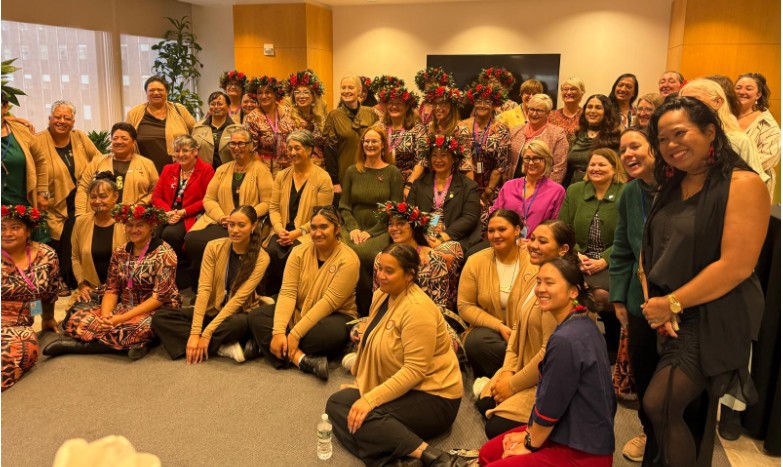 |
New Zealand Civil Society delegates to the United Nations 69th Commission on the Status of Women with Manatu Wahine Ministry of Women and Mission officials at the Permanent Mission of New Zealand to the United Nations, New York. |
Finally, throughout numerous meetings, participants remembered and honoured the communities who were unable to have a presence at CSW. This includes women experiencing poverty and violence, women living in conflict zones, women in Afghanistan, and incarcerated women—whose voices and struggles must not be forgotten.
Siobhan Dilly
NCWNZ International Action Hub
Federation of Business & Professional Women New Zealand
NCWNZ Past President Beryl Anderson ONZM: Leading with Quiet Determination
This is the third of a series of articles focusing on the NCWNZ Past Presidents Oral History Project with interviews by Carol Dawber in 2016. See the introductory article in The Circular at "NCWNZ Past Presidents oral history interviews from 2016" (August 2024).
 This month, we look back on the leadership of Beryl Anderson ONZM, President of the National Council of Women of New Zealand (NCWNZ) from 2002 to 2004.
Beryl shares stories of her journey from librarian to president, the balancing act of full-time work and volunteer leadership, and her unwavering commitment to equity and inclusion. Her presidency came at a time of digital transformation and shifting demographics—but her focus on thoughtful advocacy, practical action, and genuine connection continues to resonate today.
When Beryl Anderson reflects on her time with the National Council of Women of New Zealand, she speaks not just of policy and meetings—but of people. Of the women she worked alongside, the shifting challenges of each decade, and her quiet but steady belief that meaningful change takes time, thought, and the willingness to keep showing up.
Born in 1953 and raised in Petone, Beryl grew up in a practical, working-class family. Her father drove a petrol tanker for Caltex and later ran a service station in Karori. Her mother, once a secretary to the general manager at Winstones, stepped away from paid work to care for the family. One of five children, Beryl’s early life was shaped by strong values of service and community responsibility.
She attended Hutt Valley High School and took on the role of school librarian—her first step into what would become a career in libraries and public service. While she never originally set out to be a leader, she developed her skills through experience: becoming a library assistant at the Geological Survey, earning her Library Certificate while working, and volunteering with VSA in Fiji in the late 1970s. That experience—setting up a library in Suva, working within a different cultural context, and witnessing powerful grassroots feminist leadership—left a lasting impression.
Returning to New Zealand, Beryl continued working in public service, eventually joining the Forest Research Institute in Rotorua. It was there, amidst the pine forests and library shelves, that she found NCWNZ. The Rotorua branch brought together women from all walks of life—professional women, homemakers, business owners. Beryl loved the sense of shared purpose. She became branch president, organised debates, and worked on action plans. But she also noticed change. As more women returned to the paid workforce, it became harder to fill volunteer roles. The robust debating culture she valued began to shift.
Beryl joined the NCWNZ Board in 1998 and became president in 2002. She was the first to hold the role while working full-time—a challenge she took on with determination and a sense of duty. “It was good to be at those meetings,” she recalled, “but it also meant that the NCW president had to be available to be at those meetings.”
Balancing work at Statistics NZ and later the Institute of Environmental Science and Research (ESR) with her NCWNZ responsibilities was no small feat. She often described herself as a single woman with a personal life full of housework, laundry, and bill-paying—but she carved out space for the mahi. As president, Beryl was deeply committed to building on the foundation laid by her predecessor, Barbara Glenie. She supported NCWNZ’s shift into the digital age—encouraging the use of email, computers, and group file sharing—but also worried about what might be lost. “We used to debate over months,” she said. “Now, things happen so fast… it’s not always better.”
She was proud of the push for greater diversity and inclusion. She worked to connect NCWNZ with groups like the Māori Women’s Welfare League, PACIFICA Inc., Shakti Community Council, and the Federation of Ethnic Councils. But she was also honest about the challenges. “We’ve become even more of a white women’s organisation,” she noted, acknowledging how structural and cultural differences made long-term engagement difficult. Beryl’s passion for policy and advocacy was evident in her work on the Parliamentary Watch Committee and the Public Issues Standing Committee. She oversaw dozens of submissions on topics ranging from broadcasting and electoral reform to transport and family violence. She was known for her sharp eye for grammar, her belief in strong research, and her commitment to upholding NCWNZ’s credibility.
Her work on CEDAW (the UN Convention on the Elimination of All Forms of Discrimination Against Women) became a defining part of her leadership. She helped coordinate New Zealand’s alternate and shadow reports, travelled to New York for CEDAW meetings, and supported delegates through difficult political moments—including controversial media coverage and the strain of representing marginalised communities on a global stage. Her approach was clear-eyed and steady: “We needed to report critically,” she said, “and not just say everything’s on track.”
In conversation, Beryl often reflected on what’s changed—and what hasn’t. She pointed to unfinished business from the 1970s: pay equity, affordable childcare, the ongoing struggle for genuine gender balance. “We still don’t have the things that allow women to operate on an equal basis to men,” she said plainly. Even being the first country to give women the vote didn’t hold much weight for her in the present day. “That was 100 years ago… what does it matter today?” Still, she believed fiercely in the role of NCWNZ as a voice for women, especially in a world where volunteerism was evolving and political engagement often felt fractured. She encouraged younger women to take on leadership roles and reminded older members to make space for different perspectives. In 2019 she was awarded an ONZM for services to women.
“NCW wants to do it without diminishing the status that men have,” she said. “You can only do that by working with them—and with some very open and even processes.”
Beryl Anderson’s legacy as president is one of thoughtful, grounded leadership. She didn’t seek the spotlight but carried immense responsibility with integrity and grace. Her presidency reminds us that change doesn’t always come in loud bursts. Sometimes, it arrives in quiet persistence, in hours spent reading reports, answering phones, running meetings, and writing late-night submissions. Her story is a testament to the power of women who stay in the room, hold the thread, and keep the conversation going.
By
Christie Underwood
~~~~~ ~~~~~ ~~~~~~ ~~~~~~
See also previous articles in this series:
- NCWNZ Past President Barbara Glenie QSO (23 February 2025).
- NCWNZ Past President Janet Hesketh QSM, CNZM (24 September 2024).
Some of what's happening at local branches
 |
From left to right: Alexandra Cooper (student award winner), Jenny Brittain (President) & Desley Simpson (Deputy Mayor of Auckland) |
NCW Hibiscus Coast recently held, for the first time ever, a Tertiary Student Award Presentation and Luncheon.
This award was for $2,000, and part of the criteria was that you had to be or have been a Rodney resident who had completed one year of a two-or-more-year course.
We had a wonderful afternoon with our award winner Alexandra Cooper who is studying for a Bachelor of Health Science (Nursing).
We were delighted to be able to secure Desley Simpson, Deputy Mayor of Auckland, as our guest speaker. Desley was informative, and she brought some humour into her presentation as well.
It was a very successful event with thirty-eight guests attending.
By
Jenny Brittain
In February the NCW Manawatu decided to concentrate 2025 on these questions:
- What are the problems for new immigrants to our area?
- Are there ways in which we can contribute to assisting their needs?
For the March meeting, two new members -- Lana Daichman and Beth Weir -- spoke of their journeys.
Lana Daichman was born in Russia, then moved to Poland then Israel where she lived for many years. She studied Hebrew, gained a doctorate and had rewarding employment as a researcher. She moved to New Zealand in the last four months with her family so that her husband could accept a position at the Palmerston North hospital. Presently, as a full-time housewife, she has found the lifestyle change and isolation to be very difficult and has also had difficulty with job opportunities locally. She enjoyed practising her English at the meeting.
Next, Beth Weir reviewed her experiences resettling in New Zealand from a 30 year-stint in a very diverse South Carolina and then Seattle, Washington. In these two places, she noted that what she expected was very different to what she experienced. The biggest factors were differences in language, education and housing, as well as feeling personally isolated.
At the April meeting, we hosted Indra and Bishnu Dulal, Bhutanese settlers who arrived in 2009 from a Nepalese camp, where they were exiled because of their Hindu, Nepalese ancestry. During their 16 years at the camp, Indra worked as an English teacher. With their four children and wife’s parents, the family obtained Quota Refugee status to arrive in New Zealand. Indra has been an untiring Bhutanese liaison, interpreter, JP and community leader (RIMA). He highlighted the colder climate, unavailability of Nepalese food and undecipherable English accents as three large difficulties. Bishnu discussed the difficulties of learning to use electrical appliances and obtaining the food ingredients that they enjoyed.
 |
Dr. Fatima Junaid, Senior Lecturer, Massey University |
The AGM meeting will be introduced with a talk from another member, Dr. Fatima Junaid, who will speak about her research on former refugee women entrepreneurs, analysing enabling and detrimental factors affecting their well-being and success. This will be followed by the results of another project focused on online hate speech towards migrant women of colour, and found that the multiple jeopardies of patriarchy, social structures and whiteness hindered entrepreneurial success.
Later in May, NCW Manawatu and Graduate Women Manawatu are hosting five women councillors (Horizons and PNCC) for a panel session in the local library. This is intended to highlight local elections and encourage local women to stand, while being aware of the pitfalls and benefits of the role.
By
Anne McCarthy
For International Women’s Day 2025, NCWNZ Wellington Branch organised a climate-focused panel and workshop event "How to talk about climate action" with support from Council for International Development and UN Women Aotearoa New Zealand, and generous support from the Embassy of the Kingdom of the Netherlands. The event was an opportunity for fellow climate and gender activists to come together and discuss how to have positive grassroots conversations about climate action.

We started with a panel of fantastic speakers, sharing their experiences within grassroots campaigns and what lessons we could apply to a climate action movement through a gender lens. Massive thanks to:
- Rob Egan, Director at Piko Consulting
- Christine Langdon, Co-Founder of The Good Registry
- Annie Newman, Assistant National Secretary for E Tū
- Jemima Tito, Kaiārahi of School Strike 4 Climate Pōneke
- Aaron Packard, Communications Manager for the Environmental Law Initiative

The panel was followed by a workshop to discuss stakeholders, approaches, and more. It was acknowledged that women are often the leaders in climate action - someone suggested that we encourage fathers to become the ‘teachers’ in this space. There were so many more gems to come out of this session, here are just a few:
Having positive, grassroots conversations
- Make sure to highlight the small wins and tangible impacts.
- Take inspiration from campaigns that have had success overseas, but refer to local problems and opportunities, like local elections.
- Make it easy to make the choice by incentivising green choices and social responsibility.
- Be open and curious, respond rather than sell.
Campaign messaging
- Messages should be tailored for different audiences - meet people where they are at, make it relevant to them.
- News cycles are fast, so ongoing engagement and maintaining momentum is important.
- Build online echo chambers through platforms that people use on social media with short form content.
- Be consistent, so that people who don’t regularly think about climate change will start to see it and think about it.
- Be humorous!
- Be empowering.
Campaign design
- Build strong stakeholder mapping - who are the cheerleaders? How can you build a network that stretches across genders, sectors, ages?
- Make the most of whatever channel is available - from social media, to letters to the editor, to rallies and marches on the streets.
- Channel anger into hope, into action.
- Campaign sustainably - engage with groups and communities, rather than individuals.
- Develop contributors to the cause by supporting their skill growth and showing appreciation.

NCWNZ Wellington Branch is hosting a follow-up workshop to draft a set of climate-related questions that we want to pose to candidates running for Wellington City Council. This event will take place on Monday, 26 May, 6pm - 7:30pm, at the Southern Cross Garden Bar Restaurant. We hope to see you there: register at https://events.humanitix.com/climate-and-the-city-council-workshop.
NCWNZ Action Hubs
Are any NCWNZ members interested in serving as a convenor for the Influence and Decision-making Action Hub? Please contact [email protected].
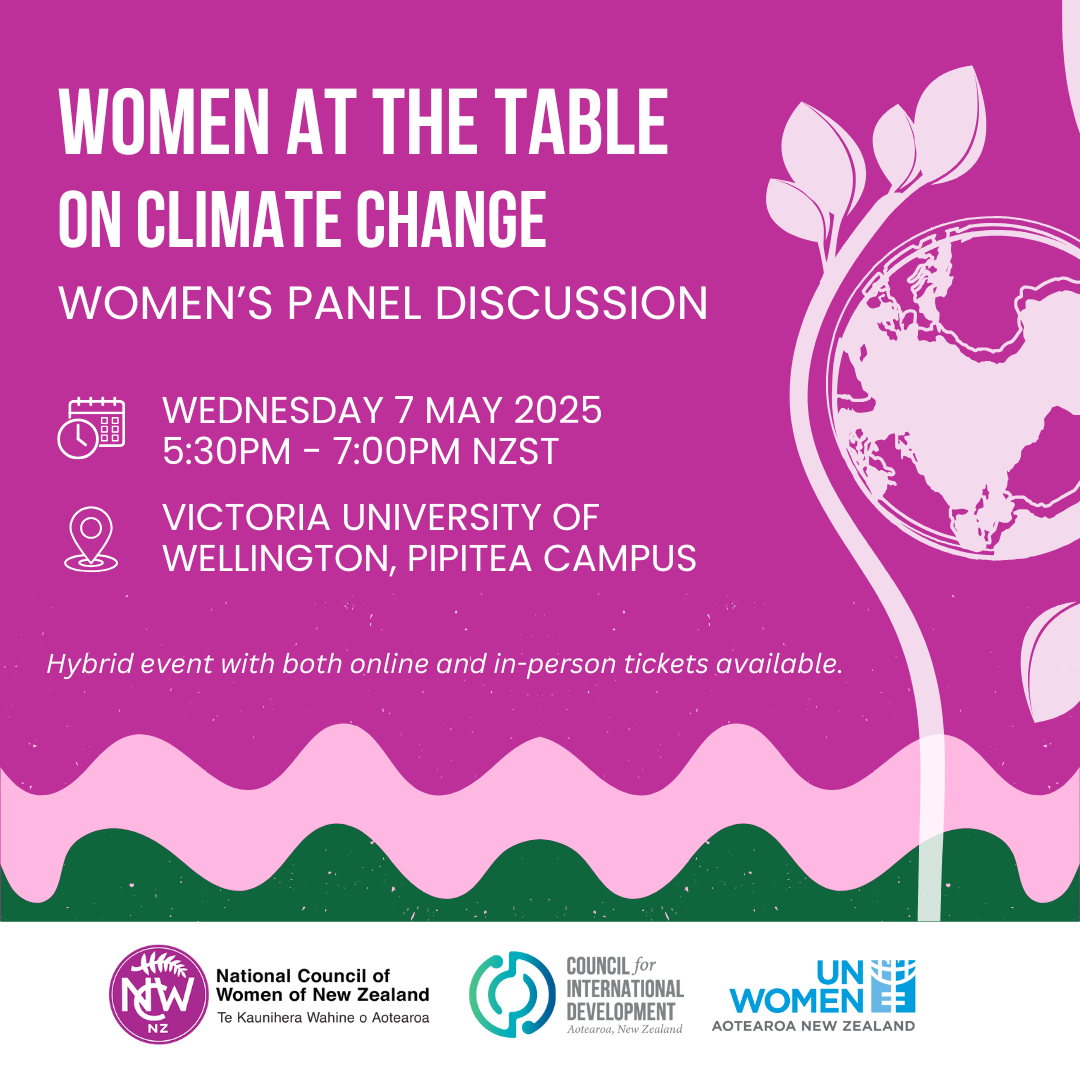
Register today in Humanitix for "Women at the Table on Climate Change" panel event on Wednesday, 7 May 2025, 5:30 - 7 p.m. The discussion will take place at Rutherford House, Victoria University of Wellington, Pipitea Campus in Wellington and registrants may also choose to attend online. This event is a collaboration between NCWNZ International Action Hub, the Council for International Development, and UN Women of Aotearoa NZ.
In this event we have a general theme of business and economics. Nanaia Mahuta, Minister of Foreign Affairs of New Zealand from 2020 to 2023, has agreed to serve as Master of Ceremonies. We have a great line-up of speakers confirmed, including from the OECD, the first female leader of an Indonesian trade union, from philanthropy and Fonterra. Our speakers include:
-
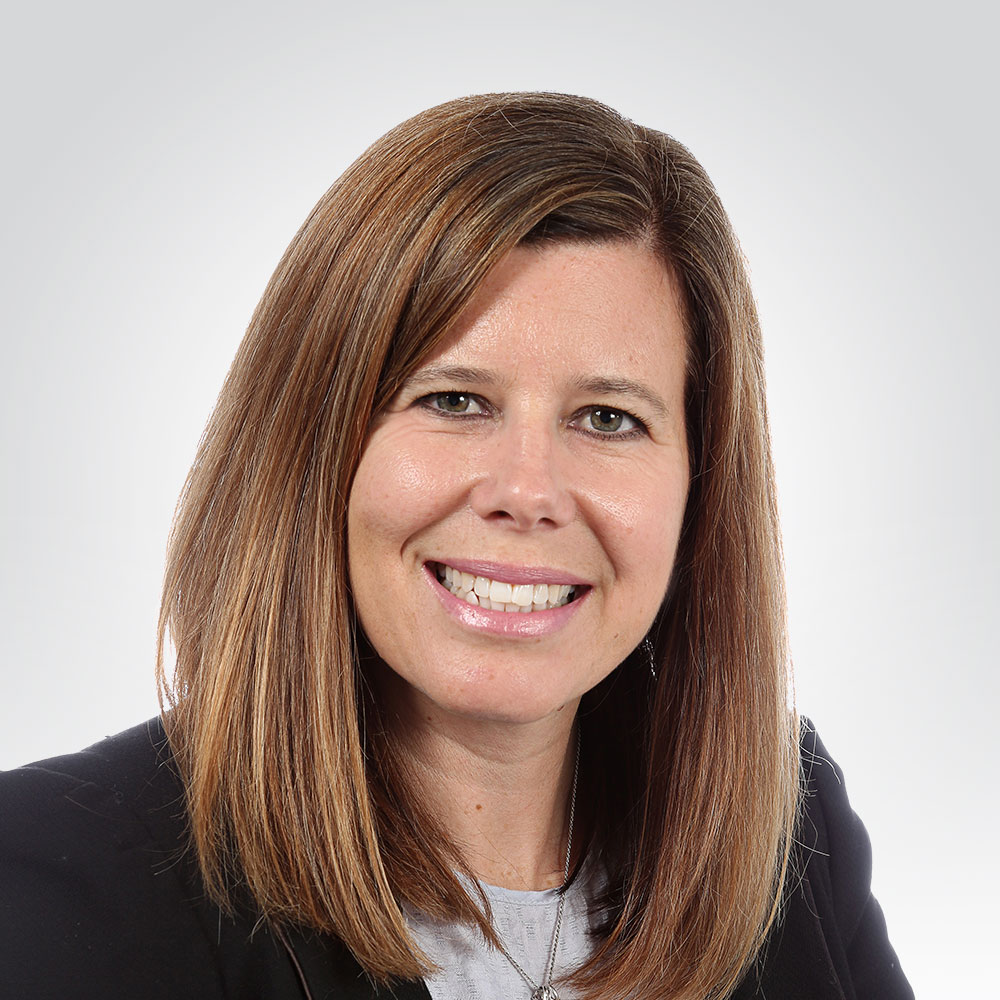 Katie Beith - Forsyth Barr
Katie has been in the Responsible Investment industry for over 20 years, with the first part of her career spent overseas, predominantly in the UK. After returning to New Zealand in 2015, she spent 6 years with the New Zealand Super Fund and then moved to become the Head of ESG (environment, social and governance) at Forsyth Barr in 2021. In her role she is responsible for incorporating ESG principles into Forsyth Barr’s firm-wide operations and investment process, including assisting financial advisers with specific client needs. Amongst other things, Katie is currently a member of New Zealand’s inaugural Stewardship Code Governing Committee, a member of the External Reporting Board’s Stakeholder Advisory Panel and is also on the Investment Committee for NZ impact investor, Purpose Capital.
-
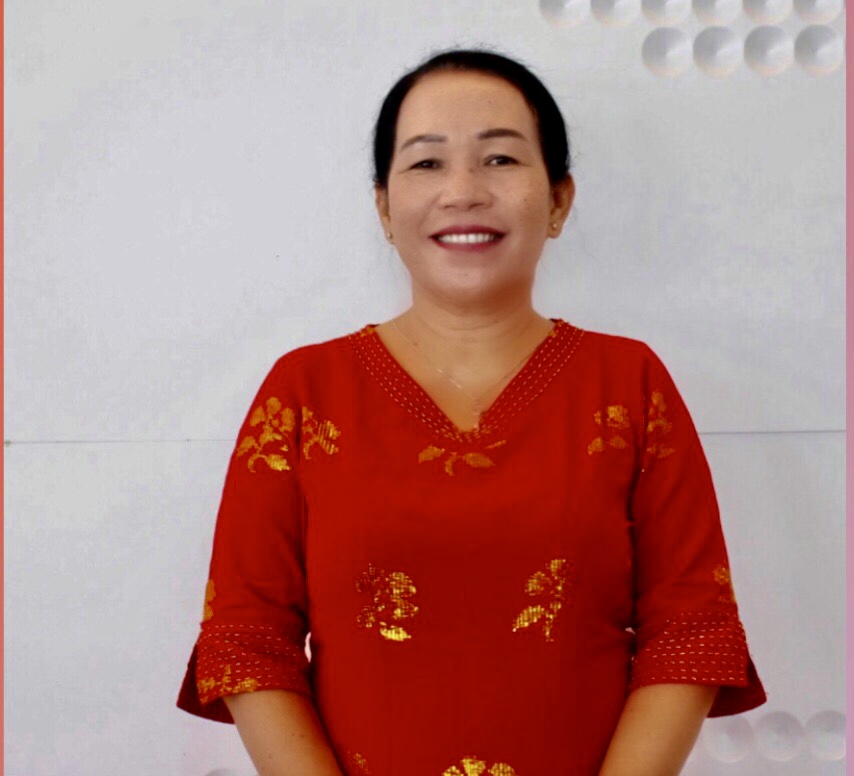 Elly Rosita Silaban - KSBSI Indonesia
Elly Rosita Silaban is the President of KSBSI Indonesia, the only female president to have led a trade union Confederation in Indonesia, she currently serving her second term (2019–2023, 2023–2027). She is a Titular Member of the General Council of ITUC Global and Asia Pacific and formerly led the Federation of Garment and Textile Workers (2007–2015). She served as Chair of L20 during Indonesia’s G20 Presidency and is a member of the Global Coalition for Social Justice and the IEA Clean Energy Labour Council. She is a prominent figure in the Indonesian labor movement and has also played a key role in advancing gender equality within unions and advocating for decent work and climate justice. Under her leadership, KSBSI has been actively involved in regional and international labor forums, including collaboration with ITUC and other global union federations. She also successfully initiated the establishment of the Forum of Major Trade Union Confederations in Indonesia for a Just Energy Transition: ForJET, which was declared on December 12, 2024.
-
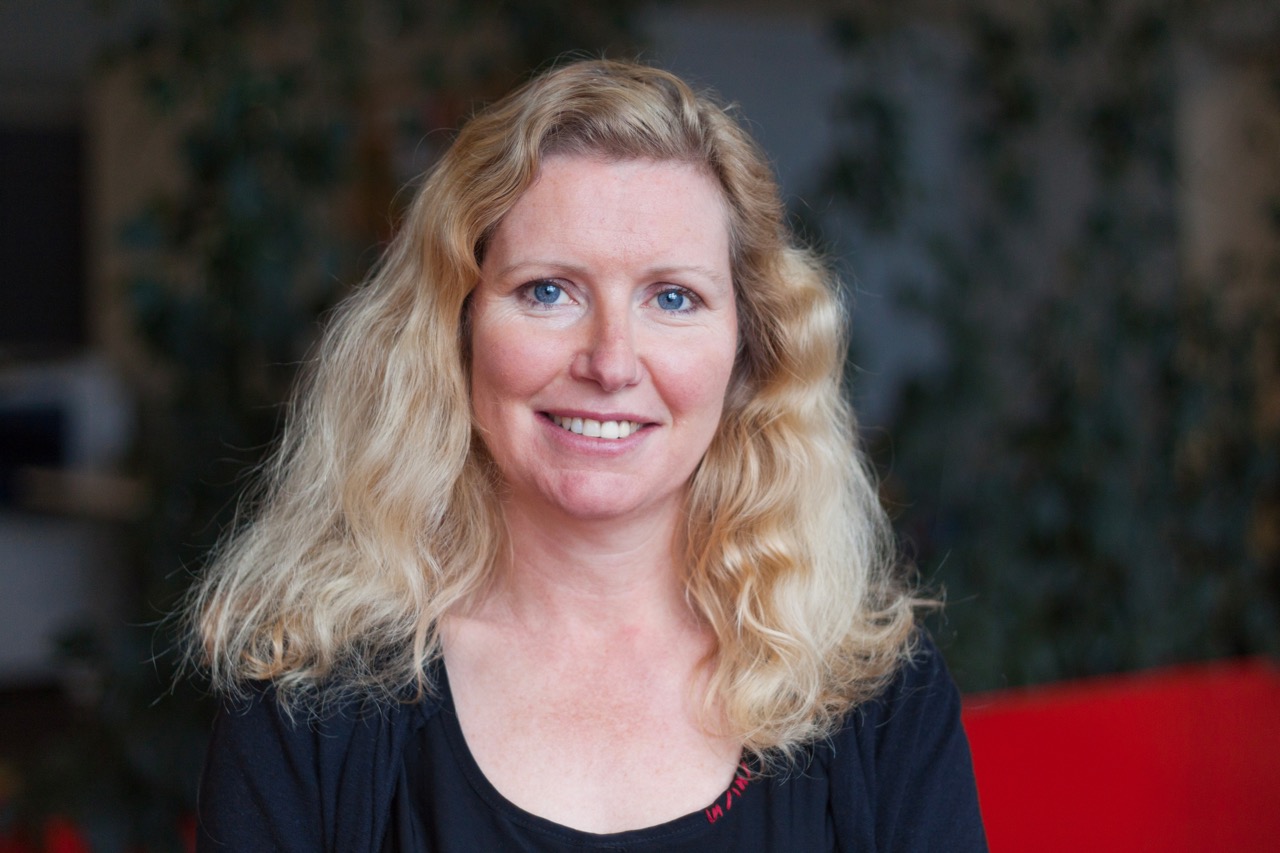 Cheryl Spain - The Gift Trust
Cheryl Spain manages and oversees The Gift Trust. She has over 25 years of experience in the non-profit sector, in New Zealand and the UK. She was inspired to work in the sector from an early age by her twin passions for social justice and environmental issues. She loves helping donors and charities to make more good happen in the world.
-
 Ella Tunnicliffe-Glass - Fonterra
Ella Tunnicliffe-Glass holds the role of Senior Manager Sustainability Strategy at Fonterra. She is responsible for leading the integration of climate-related risks and opportunities into business processes and for preparing Fonterra’s climate-related disclosures. Ella previously worked in Fonterra’s Group Strategy team, focussing on the Co-op’s strategic choice to be a leader in sustainability, and before that worked as a strategy consultant with the Boston Consulting Group. She holds an MPhil from the University of Cambridge and Bachelor of Science and Bachelor of Music (Honours) degrees from the University of Auckland.
-
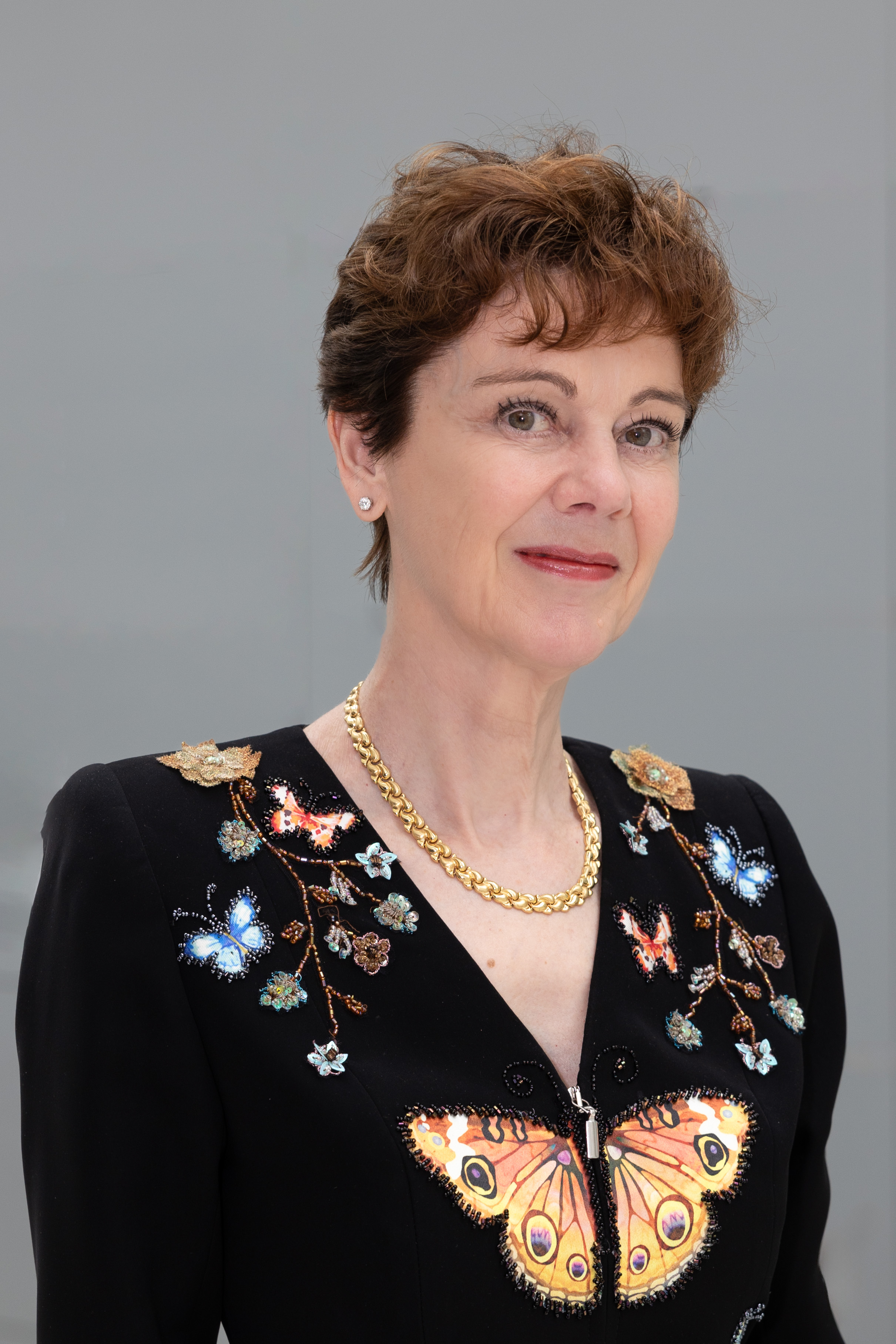 Jo Tyndall - Environment Directorate, OECD
Jo Tyndall is Director, Environment Directorate at the OECD where she oversees the implementation of the Directorate’s programme of work, covering a broad range of environmental issues, including: green growth; climate change; biodiversity; quality of ecosystems; eco-innovation; circular economy; and, resource productivity. She was, most recently, New Zealand High Commissioner (Ambassador) to Singapore from February 2019 to September 2022. Prior to that, Jo served as New Zealand’s Climate Change Ambassador, commencing this role in June 2010. From 2016 to December 2018, she also co-chaired the United Nations Framework Convention on Climate Change’s (UNFCCC) Ad Hoc Working Group on the Paris Agreement (APA). As Climate Change Ambassador, she was head of delegation to the United Nations climate negotiations with the Ministry of Foreign Affairs and Trade. Prior to her role as Climate Change Ambassador, Ms Tyndall was Director of the Broadcasting Unit in the Ministry for Culture and Heritage. From 1999 to 2006, she was Chief Executive of the public broadcasting funding body, NZ On Air. She has also served as Chief Executive of two screen industry organisations - the Screen Production and Development Association (SPADA) and Project Blue Sky (1994 to 1999). Ms Tyndall began her career as a multilateral trade policy specialist with the then Department of Trade and Industry and subsequently the Ministry of Foreign Affairs and Trade.
Resources to share in meetings and with your networks
The Ministry of Education’s Relationship and Sexuality Education guidelines were removed as part of the Government’s coalition agreement. (Read the RNZ article here.) A draft framework of a revised curriculum has been put out for review and comments. The biggest differences are that any reference to diverse genders has been erased, intersex realities ignored, no mention of HIV, and sexual violence risk is inadequately covered. Pacific researchers urge New Zealanders to review the draft framework and urge schools to use the 2020 R&SE guildelines. Read the University of Auckland's news article featuring Research Fellow Dr Analosa Veukiso-Ulugia. She asserts that says removal of the 2020 R&SE guidelines poses great risk for Pacific, Rainbow and gender-diverse youth.
NCWNZ's Education Hub is making a submission on this issue - please contact them at [email protected] to find out more on this. Also, InsideOUT provides a guide for individuals interested in making a submission regarding the draft framework by the deadline of 9 May 2025.

Do you know about the Elsie Initiative for Women in Peace Operations? Canada announced the Elsie Initiative for Women in Peace Operations during the Vancouver UN Peacekeeping Defence Ministerial Conference in November 2017.The second phase of the Initiative, from April 2022 to March 2027, reinforces Canada’s commitment to gender equity and to the reform of UN peace operations. According to UN Women announcement, by the end of 2023, most targets set by the United Nations Uniformed Gender Parity Strategy 2018-2028 had been met or exceeded, except on military contingents and staff officers. Read more about this initiative on the UN website.
In 2022 the Ministry of Justice commissioned a report by lawyer Deborah Inder: "Review of Children's Participation in the Family Justice System of Aotearoa New Zealand" - this report was sent to the Backbone Collective upon receipt of a formal request via the Official Information Act. You can read more about this troubling report about the safety of children in Family Court, and the continued work of the Backbone Collective in this area, at their blog. Amy Williams wrote a compelling article in April for RNZ that features the brave campaign taken on by Backbone Collective manager Deborah Mackenzie.
Readings to consider
Toward a genuine "Ocean of Peace" - Pacific Islands Forum leaders will meet in September to decide whether to declare the Pacific a demilitarised zone. Read the op-ed by Pacific historian Marco de Jong and law lecturer Dylan Asafo in E-Tangata.

The proposed new stalking law, expected to pass this year, will offer some protection from online abuse - but police need to be able to identify the perpetrator. See the article on this and a new study of online abuse of female MPs in The Conversation (10 April 2025). You can read the research article "Misogyny, racism, and threats to our families: a qualitative study of harassment of female politicians," Kotuitui: New Zealand Journal of Social Sciences Online (25 February 2025) online and offered with open access to all.
from Christine King:
For those who are dismayed about the trends in IT and in social media... and for mor those who had hoped that educational technology might be a way to provide a step toward fairness and equity in the classroom. "The early promise of flexi-work and increased labor participation for women in the platform economy has not materialized. Instead, platformization has deepened intersectional inequalities—of gender, class, geography, and race, making women workers more vulnerable." Read this report from UN Women - "Pathways to Gender Equality in the Platform Economy: A Policy Agenda for Beijing+30 & Beyond" (Policy Report, March 2025).
Stories to celebrate
Jacinda Ardern is the only woman chosen by University of Oxford for 2025 honorary degree. Read more about this in the University's press release.
Also at Oxford: Mākereti Papakura, first indigenous woman to study at Oxford, to receive posthumous degree from the School of Anthropology and Museum Ethnography at the University of Oxford more than 100 years after she began her studies. Read about it in the RNZ article here.

The New Zealand Family Violence Clearinghouse has a new name: Vine (Violence Information Aotearoa). "Our name is inspired by the idea of the kūmara Vine, te aka kūmara, a metaphor for communication and sharing of information. Like the kūmara Vine, we are here to connect and communicate to create new growth. We share research, analysis and knowledge about sexual violence and family violence in Aotearoa New Zealand to help drive positive change. We are an independent resource hub that curates, connects and shares research and information with people working to end violence and grow oranga." Check out their new website at https://www.vine.org.nz/.
Manatū Wāhine Ministry for Women has launched a new toolkit "Free to lead" in collaboration with Netsafe to support women who have a public profile while navigating the online world. The toolkit includes two modules and a video series "Beyond the Keyboard" to learn how to act against instances of online harm. Toolkits are available for individuals and for employers. See it for yourself at https://www.women.govt.nz/womens-safety/free-lead-toolkit
Deaf Aotearoa partnered with VisAble to create a video series to assist the Deaf community with learning about domestic and sexual violence. Share the information about this new project: https://www.deaf.org.nz/info-in-nzsl/understanding-family-and-sexual-violence/
Dates to note for May 2025
1-5 May - Perinatal Mental Health Awareness Week
7 May - Women at the Table on Climate Change - hosted by NCWNZ International Action Hub in collaboration with Council for International Development and UN Women - presented in person and online. Register at https://events.humanitix.com/women-at-the-table-on-climate-change-9p2a3epf
8-9 May - Time of Remembrance and Reconciliation for Those Who Lost Their Lives during the Second World War
9 May - feedback due on draft guidelines for the new R&SE curriculum https://newzealandcurriculum.tahurangi.education.govt.nz/consultation-on-draft-rse-framework-now-open/5637263826.p
11 May - Mother's Day
16 May - Pink Shirt Day - 2025 pink shirts available at https://pinkshirtday.org.nz/
22 May - International Day for Biological Diversity
23 May - International Day to End Obstetric Fistula
29 May - International Day of UN Peacekeepers
Quotation to ponder
"...
it starts when you care
to act, it starts when you do
it again after they said no,
it starts when you say We
and know who you mean, and each
day you mean one more."
--Marge Piercy, "The Low Road,"
from The Moon is Always Female (Knopf, 1980).
Whakataukī to share
I orea te tuatara, ka puta ki waho.
A problem is solved by continuing to find solutions.
The story here is about using a stick to prod a tuatara from its hole. It is about being persistent, adaptable and creative in your collective journey toward success. The ancient tuatara is careful and resilient as it navigates its environment. The wisdom of the tuatara encourages us to be honest with ourselves and willing to dig deeply in our pursuits for making a positive difference and lasting changes for our communities.
-=-=--=-=-
The Circular is the official newsletter of The National Council of Women of New Zealand. Archived copies are available at the National Library of New Zealand (ISSN 2815-8644).
Do you have some news to share? Please send an email to the newsletter managing editor, Randolph Hollingsworth, at [email protected].