
 At the sixty-ninth session of the Commission on the Status of Women (CSW), women’s civil society representatives voiced deep concerns over the persistent barriers to achieving gender equality and lack of government action on the 1995 Beijing Declaration and Platform of Action. More than fifty New Zealand civil society delegates were in New York for the first week of the CSW session 10 to 14 March.
Barriers to gender equality include systemic gender discrimination, gender-based violence, the lack of equal representation of women at all decision-making levels, unpaid and unrecognised work, and the continued struggle for equality in economic participation, health, education, and justice. In New Zealand, these barriers are worse for Māori, Pasifika, Asian, migrant, refugee, disabled, LGBTQIA+ and rural women.
Speaking at the CSW high-level ministerial forum, youth representative, Oriwa Jury, said, “we the youth delegates of the Māori Women’s Welfare League recommend that the CSW acknowledge colonisation as the primary barrier that ultimately prevents indigenous women’s and girl’s full participation in politics and decision-making.”
In addition to these longstanding challenges, new and emerging issues took centre stage at CSW. These include the lack of women’s representation in decision-making on climate justice and disaster response, the rise of online harm and technology-facilitated violence, the relationship between women, peace and security, and the significant underrepresentation of women in STEM fields, particularly in Artificial Intelligence.
One of the most pressing concerns raised was the lack of civil society representation in decision-making at the United Nations. There was a continued call for a woman to be appointed as the Secretary-General of the UN—a topic that resonated strongly among civil society participants. The importance of involvement of young people was also highlighted.
Rangatahi Kaiata Kaitao, of P.A.C.I.F.I.C.A INC, shared her reflections at a meeting of New Zealand women’s civil societies at the Permanent Mission of New Zealand: “Much like the way that the tukutuku panels that adorn the walls here and at the UN Complex are tied together, the purpose of this event is intrinsically tied to the role of youth in society- and therefore, it is essential that young women continue to gain the opportunity to attend. That young women are handed that responsibility. That young women are empowered to take a chance, make a change, and join the cycle once more.”
Meetings and discussions took place against the backdrop of a major crisis for the United Nations, which is grappling with severe liquidity issues, and a challenging political climate for many nations. Compounding this, funding for civil society and nonprofits is facing its most significant reduction in decades in a difficult economic setting. The consequences are dire: individuals working in advocacy, aid and development have lost their jobs, and countless vulnerable families who rely on development and humanitarian assistance will lose vital support. The devastating reality is that many more women are struggling to put food on the table in New Zealand and worldwide.
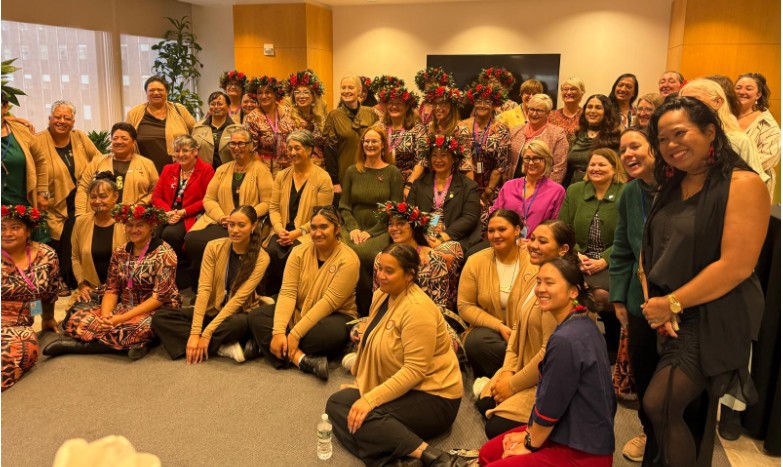 |
| New Zealand Civil Society delegates to the United Nations 69th Commission on the Status of Women with Manatu Wahine Ministry of Women and Mission officials at the Permanent Mission of New Zealand to the United Nations, New York. |
Finally, throughout numerous meetings, participants remembered and honoured the communities who were unable to have a presence at CSW. This includes women experiencing poverty and violence, women living in conflict zones, women in Afghanistan, and incarcerated women—whose voices and struggles must not be forgotten.
Siobhan Dilly
NCWNZ International Action Hub
Federation of Business & Professional Women New Zealand
To read more articles from The Circular (March-April 2025) issue 651, click on the tag below.