
 |
|
May-June 2026, Issue 657 | Action Hubs | News | GenderEqual NZ | |
Table of Contents
 |
| Suzanne Manning NCWNZ President |
President's kōrero
With my time as President of NCWNZ coming to an end, I’m preparing for the transition and reflecting on the last five to six years. Recent comments by an external stakeholder referring to the stability of NCWNZ leadership as a positive feature of recent times is something I’m proud of, working alongside some wonderful Board members. I especially want to acknowledge Kerri, who has been working with me on the Board since only a few months after I took on the Presidency.
Yet stability of leadership can easily turn into stagnation, especially if the leaders run out of energy – you cannot pour from an empty cup. I came from a Playcentre background where the concept of emergent leadership is embedded. This concept is not only about growing and encouraging leaders to emerge from the group, but it is equally important for the leader to move aside. This allows for renewal and a refresh, a continuation of leadership but with a different style.
For emergent leadership to work, we need new people to continuously join the Board and learn from those who are already in the role. It is about building the experience to be confident when time comes to step into that leadership role.
Nominations for Board vacancies have recently closed, and currently we have fewer nominations than vacancies. Nominees need to have been a member for two years so that they understand NCWNZ’s kaupapa and culture; and we need people with some governance experience to contribute their wisdom to a small Board. We are also looking for more diverse perspectives on the Board, from people with different backgrounds, geographical location, ethnicities and age groups. Could this be you?
If anyone would like to know more, you can talk with any of the current Board members. Even if it is not you this year, but might be in the future – me kōrero mātou: let’s talk!
Suzanne Manning
President
2026 King’s Birthday honours
178 people received honours in the King’s Birthday list. Again, as with the 2024 and 2025 King's Birthday lists, men received more awards than women: this year, 53% (95) compared with 47% (83). Another disappointing result for women who received 47% of the honours, again most noticeable in the higher awards where only 43% went to women. See the full list at https://www.dpmc.govt.nz/publications/kings-birthday-honours-list-2026.
|
Award |
Male |
Mx |
Female |
TOTAL |
% Male |
% Mx |
% Female |
|
ONZ + additional / honorary |
0 |
0 |
0 |
0 |
0% |
0% |
0% |
|
GNZM / DNZM / KNZM / hon |
4 |
0 |
2 |
6 |
67% |
0% |
33% |
|
CNZM + honorary member |
6 |
0 |
4 |
10 |
60% |
0% |
40% |
|
ONZM + honorary member |
23 |
0 |
16 |
39 |
59% |
0% |
41% |
|
MNZM + honorary member |
39 |
0 |
32 |
71 |
55% |
0% |
45% |
|
KSO |
1 |
0 |
2 |
3 |
33% |
0% |
67% |
|
KSM + honorary member |
20 |
0 |
27 |
47 |
43% |
0% |
57% |
|
DSD |
1 |
0 |
0 |
1 |
100% |
0% |
0% |
|
Total |
95 |
0 |
83 |
178 |
53% |
0% |
47% |
|
sport-related |
|
|
|
25 |
|
|
|
|
arts-related |
|
|
|
28 |
|
|
|
|
ONZ to MNZM |
72 |
0 |
54 |
126 |
57% |
0% |
43% |
|
KSO & KSM |
21 |
0 |
29 |
50 |
42% |
0% |
58% |
As Prime Minister Christopher Luxon said, ‘Every New Zealander honoured on this list has helped make our country a stronger, better place.’ Congratulations to all the winners, especially those who were acknowledged for their contribution to women. Some to note are:
-
ONZM - Officers of the New Zealand Order of Merit
- Ms Margaret Ruth (Ruth) DAVY, of Auckland, for services to nursing and women’s health. Ms Ruth Davy is a leading figure in women’s heath, nursing and public health leadership, who has worked to reduce inequity and remove barriers to healthcare for women. She led the establishment of New Zealand’s first mobile van service for women’s health, providing free health checks and education in hard-to-reach communities.
- Ms Karleen Mae EVERITT, of Haruru, for services to Māori and business. She has served as a Director of Global Women New Zealand since 2021. Ms Everitt won the Dame Mira Szászy Alumni Award at the 2024 University of Auckland Aotearoa Māori Business Leaders Awards.
- Mrs Archna TANDON, JP, of Lincoln, for services to ethnic communities and women. As National President of New Zealand Federation of Multicultural Women Councils from 2016 to 2022, Mrs Tandon developed and led Women’s Wellbeing Framework, an initiative adopted by 24 regional multicultural councils to advance culturally appropriate strategies for empowering multiethnic women. Mrs Tandon chaired Shakti Ethnic Women’s Support Group from 2013 to 2017.
-
MNZM - Members of the New Zealand Order of Merit
- Ms Elizabeth Anne (Anne) LEE, of Auckland, for services to refugees, migrants and education. Ms Lee has been manager of the Umma Trust since 2014, where she provides support for refugee and migrant communities to around 6,000 former refugees annually.
- Mrs Filomena (Talaleomalie Mena) LOHENI, of Auckland, for services to Pacific fashion. Mrs Loheni is a seamstress and established Mena Designs to help alter garments in Samoa, taking koha in exchange for alterations. Mena Designs has been showcased globally including in Fiji, Japan, Canada, and the United States of America. Many organisations have benefitted from Mena Designs’ support including PACIFICA Women West Auckland, Habitat for Humanity New Zealand, and Aoaga Fa’a Samoa early childhood centre in Auckland.
- Mr Russell Owen SMITH, of Auckland, and Ms Joy Esther TE WIATA, of Opua. For services to sexual violence prevention. Mr Smith (Ngāti Kahu, Ngāpuhi) and Ms Joy Te Wiata (Ngāti Raukawa ki te Tonga) are co-founders of Korowai Tūmanako, a Kaupapa Māori specialist sexual violence service operating across Tāmaki Makaurau Auckland and Te Tai Tokerau Northland. Their leadership has driven national advocacy, including the MASSIVE (Men Against Sexual Violence) hīkoi and the Seven7 marathon challenge.
- Mrs Vania Nive Hannah WOLFGRAMM, of Auckland, for services to rugby. Mrs Wolfgramm played for the Black Ferns XV from 2003 to 2007, the Black Ferns Sevens in 2008 and played 45 games representing Auckland in the Farah Palmer Cup. She has fostered Pacific rugby at a grassroots level with the establishment of the Pacific Aotearoa Cup. Mrs Wolfgramm has been a rugby commentator for Sky Sport, becoming one of the first Pasifika women analysts on New Zealand rugby broadcasting.
-
KSO - King's Service Order
- Ms Robyn Mary HUNT, ONZM, of Wellington, for services to people with disabilities and the arts. As a Human Rights Commissioner from 2002 to 2010, Ms Hunt led a consultation with the disability community that determined disabled people as a priority group in New Zealand’s first ever Human Rights Action Plan. She has provided expertise to Creative New Zealand’s Manga Tipua Deaf and Disabled Leadership Rōpū, the Arts Council, and Arts Access Aotearoa. She has helped develop the Arts Council’s Tapatahi Accessibility Policy and Action Plan 2023-2028. Her involvement with the Arts for All Network since 2010 has supported arts venues to increase accessibility.
-
KSM - King's Service Medal
- Ms Rebecca Rae (Becs) AMUNDSEN, of Invercargill, for services to local government, arts and the community. Ms Amundsen has provided longstanding support for the development of an active arts sector in Southland, through her governance roles with the Dan Davin Foundation Literary Foundation and Arts Murihiku Charitable Trust. Through her involvement with the National Council of Women and KIND Women, she continues to advocate for women’s rights and working towards a more equitable society. She spearheaded the Southland Oral History Project from 2008 to 2017.
- Mrs Barbara Kay ASTILL, JP, of Auckland, for services to women, the community and governance. Mrs Astill held a range of Board roles in several New Zealand companies including Radio New Zealand, Trust Bank New Zealand, and Counties Manukau Netball. She has been a member of the Zonta Club of East Auckland since 1993, serving multiple terms as President. She has held national governance roles with Zonta New Zealand.
- Ms Elizabeth Anne MORTLAND, of Taihape, for services to the community. She initiated Te Roopu Wāhine Aroha to assist Māori women to pursue further training. She was a manager of the Taihape Community Development Trust from 2009 to 2018, supporting numerous community projects, including organising Taihape’s annual Gumboot Day. She established the New Zealand Boot Throwing Association. She spent three years as a Volunteer Service Abroad volunteer in Vanuatu helping advance women’s issues.
- Dr Shanthi SELVAKUMAR, of Auckland, for services to migrant and refugee communities. Dr Shanthi Selvakumar has been a dedicated physician and a strong advocate for migrant women and children affected by domestic violence for more than three decades. Through the Sri Sathya Sai Global Council New Zealand, she leads medical missions across New Zealand and the Pacific Islands, running free clinics and providing essential medication to vulnerable populations. She has committed to extensive community advocacy, volunteering for more than 20 years with Shakti ethnic women’s refuge, becoming its Chairperson in 2019. Dr Selvakumar was awarded a Kiwibank Local Hero Award in 2018 in recognition of her sustained commitment to community service.
Information about nominating someone for an honour is available on the Department of the Prime Minister and Cabinet website at https://www.dpmc.govt.nz/our-programmes/new-zealand-royal-honours/make-nomination. Nomination forms are accepted throughout the year, but the processing and consideration of nominations is likely to take at least six months prior to the announcement of an honours list at King's Birthday or New Year.
By
Beryl Anderson, ONZM
UN Special Rapporteur consultation on violence against older women
On Thursday May 14th, I had the honour of attending one of three sessions moderated by the United Nations Special Rapporteur Reem Alsalem to consult on assessment, prevention and protection of violence against older women. The sessions were intended as a follow-up to the written submission process in April this year to the Office of the United Nations High Commissioner for Human Rights (OHCHR) on Violence Against Older Women, in which NCWNZ participated. (See more at https://www.ohchr.org/en/special-procedures/sr-violence-against-women.)
Each session was three hours, involving different participants. At the session I attended, there were a total of seventeen women from Europe, Africa, India, South America, the Middle East, Australia and two of us from Aotearoa New Zealand. We were advised of the topics ahead of time.
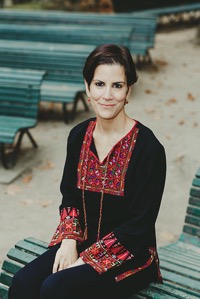 Ms. Reem made clear in her preamble to the session that although sessions were recorded and transcribed, these materials would not be made available to participants. We introduced ourselves, said who we represented, then dived into the first question. I spoke first, making sure to highlight that I was presenting the contributions of our members. There were some very smart people on the call, and Reem guided everyone competently and efficiently, while also being approachable and warm.
The first hour focused on the definition of ‘older women’ and the types of violence they face. I mentioned that in Aotearoa New Zealand, we usually refer to older people as those ages 65+, based on pension eligibility, although Māori women are often classified as ‘older’ from ages 55+. I also mentioned that these classifications were not specific to women, and that NCWNZ’s membership had not been canvassed on the specific definition of ‘older women’.
A lively discussion developed around non-chronological indicators of 'older women', given the many social roles women inhabit in their life span, the contexts of their lives, and their health. Physical and mental function were suggested as markers, while also acknowledging the difference between using societal or policy structures as a basis for definition vs. subjective positions on aging (e.g., feeling older or younger than one’s chronological age). An example of context informing subjective ideas of age included sex workers in Colombia, who are potentially exposed to a lifetime of violence and are considered old or feel old themselves when it is not reflected in their chronological age.
We discussed emerging types of abuse, such as abuse by neglect. The example was given of older women living alone in Gaza, who have limited access to aid supplies, and are often left behind when displacement orders are given. Another example was administrative violence; for example, recognising that mistakes in benefit payments by organisations are also a form of violence, given that older women are often living payment-to-payment.
The second hour focused on best practices of governments and other stakeholders to prevent and protect older women from violence. It was evident from participants’ contributions that there was a dearth of government-led best practices that specifically focused on older women. Based on NCWNZ members’ input to our initial submission, I stated that organisations receiving government funding or contracts were required to submit monthly reports of any abuse complaints to the NZ Ministry of Health, and although these data are often not reported as disaggregated by age or sex. I also mentioned the reporting mechanisms available to the women themselves. Others mentioned the usefulness of surveys with disaggregated data, although it was acknowledged that such data collection methods are not usually analysed by sex and/or age. There were two stand-out best practices for me:
- The Indian government, through the Nirbhaya Fund, provides funding and wrap-around services for women affected by violence; and
- The availability of services (financial support, healthcare access, social welfare) for sex workers in Colombia from both community and government sources.
Notably, these interventions were not specifically focused on older women.
The third and final hour was devoted to recommendations for prevention, assistance, and protection. There were many recommendations made by the group. I summarized recommendations from NCWNZ members, of which there were many! I suggest reading the April submission if members would like a reminder (download .pdf file from NCWNZ website here).
Many of our recommendations were echoed by other countries. Further recommendations included: recognition of all types of violence against older women, including sexual violence; international training methods for medical professionals and social workers to recognize domestic violence and its potentially delayed ramifications; a lifespan approach to violence prevention; and collecting and reporting data that is disaggregated in terms of both sex and age. For rural women, who often live alone in isolated areas, recommended actions included providing mobile health clinics, housing options, and support during natural disasters.
Overall, the three-hour session was informative, productive, and enjoyable. Somewhat unfortunately, it was comforting to find that Aotearoa New Zealand is not unusual in its lack of focus on older women. However, this potentially presents an opportunity for NCWNZ to be a trend-setter when it comes to older women’s health and well-being, particularly in the field of violence protection.
The Special Rapporteur’s report will be published online, which I’m told will be at https://mandates.un.org/. Once the specific mandate has been forwarded to consultation participants, I’ll circulate the link to NCWNZ members.
I really enjoyed the opportunity to participate in this process.
By
Nicky Newton
NCWNZ Submissions Coordination Committee
2026 PACIFICA Grants
From a media release from Pacific Allied (Women's) Council Inspires Faith in Ideals Concerning All, Incorporated (P.A.C.I.F.I.C.A. Inc.), 15 June 2026.
In its 50th year, PACIFICA is proud to announce a record number of 2026 PACIFICA Grant recipients. PACIFICA provides financial assistance to Pacific women and girls with their educational development and to help fulfil their dreams and aspirations. This year, PACIFICA received a very high number of worthy applications from Pacific women and girls demonstrating their achievements, financial need, resilience, leadership, and aspirations. Given our Golden Jubilee and the high number and quality of applications received, PACIFICA was in the financial position to significantly increase the number of grants awarded in 2026.
A record number of twenty-six grants have been awarded: eight Secondary School Grants ($650 each); and eighteen Tertiary Education Grants ($2,000 each). PACIFICA Inc. National President, Lemalu Repeka Lelaulu, says: 'In our 50th year, we’re proud to have significantly increased our grants – giving even more deserving recipients the support they need to pursue their goals. These grants recognise not just the recipients, but the families, teachers, mentors and communities standing behind them.'
Victoria-Leigh Lam, a Tertiary Education Grant recipient from the Southern region, says: 'I am a fourth-year engineering student at the University of Canterbury and I am so grateful to have received this grant. With this, I can be relieved of some of the financial stress I may face once I complete my studies. After attending the Youth Conference, I realised how blessed I am to be a part of an organisation that empowers and inspires Pacific women. I can’t wait to be someone young Pacific women look up to, just as much as I look up to the other members within this organisation, the guest speakers at the conference, and other youth who attended.'
PACIFICA extends its heartfelt congratulations to all recipients and wishes them every success on their educational journeys. The organisation also acknowledges all applicants who applied this year. The quality of applications received reinforces the importance of continuing to invest in opportunities that support the growth and success of Pacific women and girls.
2026 PACIFICA Secondary School Grant Recipients:
- Lesulu T-Pole Te Aho o Te Kura Pounamu Northern region
- Halo Roache Marcellin College Northern region
- Soana Koloamatangi Western Springs College Northern region
- Avalani Wright St Catherine’s College Central region
- Talalelei Masinalupe Palmerston North Girls’ High School Central region
- Levina Levaula Faalogo Wairarapa College Central region
- Elani Mafi Trinity Catholic College Southern region
- Freedom D’Leaana Aurora College Southern region
2026 PACIFICA Tertiary Education Grant Recipients
- Eseta Rasmussen University of Auckland Northern region
- Nicolee Luteru UNITEC Northern region
- Georose Tuineau-Lafaele University of Waikato Northern region
- Priscilla Peni Te Wananga o Aotearoa Northern region
- Tiueti Lua Manukau Institute of Technology Northern region
- Susan Tahavalu Te Wananga o Aotearoa Northern region
- Flo Murray Whitireia Polytechnic Central region
- Vevesi Leilua-Toilolo Takitini (WERA Training Centre) Central region
- Tanumia Matega Victoria University of Wellington Central region
- Tamara Brown Massey University Central region
- Siufaga Kerslake Massey University Central region
- Toetujoetina Lilo Massey University Central region
- Victoria-Leigh Lam University of Canterbury Southern region
- Lucy Keung University of Otago Southern region
- Tia Fleming University of Otago Southern region
- Eva-Marie Auuaiti Southern Institute of Technology Southern region
- Christean Makitae Southern Institute of Technology Southern region
- Sarote Kamilo Ara Institute of Canterbury Southern region
A woman for the UN's new Secretary-General?
The United Nations will choose a new Secretary-General this year to succeed the current head, António Guterres, when he steps down in December 2026. In its 80-year history, the UN has never had a woman leader. As of May 2026, the following women are candidates (nominators in parens): Michelle Bachelet Jeria - Chilean politician, physician and former president (Brazil and Mexico), Rebeca Grynspan Mayufis - Costa Rican economist, politician, and UN official (Costa Rica), María Fernanda Espinosa Garcés - an Ecuadorian linguist, poet, politician, and diplomat (Antigua and Barbuda). The Security Council begins its deliberations in July.
See all the nominee materials here at https://www.un.org/en/sg-selection-and-appointment.
See also the Instagram short reel with Helen Clark on why the 10th Secretary-General should be a woman. https://www.instagram.com/reel/DZFMg0lAU7m/.
Some of what's happening at local branches
This year’s theme of equality has led us into a range of events. In February we joined Wanganui NCW to listen to actress and producer Daisy Boulton speak about the plans for an upcoming film about New Zealand suffragists and the vote. (Listen more about this in her RNZ interview on 6 February 2026.)
In April, the Palmerston North City Library invited us to be part of their Heritage Month presentations. For this, four NCW Manawatu members shared a panel session outlining women’ place in the history of egalitarianism, New Zealand government policies, the development of NCWNZ, women’s job roles and education. A lively discussion followed. We have been invited to continue presenting within the Heritage month events.
 |
|
Presenters and supporters at the NCWM Heritage Month presentation. |
For our branch’s Annual General Meeting the following month, the Acting Principal of Palmerston North Girls’ High, Anna Brookie, spoke of challenges facing women in secondary education today. A follow-up breakfast with speakers is planned to be hosted for students at the school.
|
|
|
Left: Anna Brookie, third from left, |

Finally, this month’s event included a zoom from Louise Tapper and Rosemary de Plessis on their research about the effects of the earthquakes, Muslim shootings, and Covid on women and female adolescents in Christchurch. Though the two areas of research discussed targeted participants of different ages, the findings were similar in that they emphasised the need for family and community links, personal flexibility and resilience building, and efficient infrastructure communications. Extra information on the research can be found here:
- ‘Making the most of now: Young women’s experiences of the COVID-19 pandemic,’ UC Quake Studies (2021),
https://quakestudies.canterbury.ac.nz/store/collection/22233 - ‘Making the most of now,’ The Circular (2022),
https://www.ncwnz.org.nz/making_the_most_of_now
By
Anne McCarthy
NCWNZ Manawatu Branch
 Manukau and Hibiscus Coast Branches are excitedly preparing to host everyone for this year’s Conference, `Our Voices, Our Power, Our Future – 130 Years of National Council of Women’. We have an exciting programme for our day and a half together at the Jetpark Hotel and Conference Centre, 63 Westney Road, Auckland, 2022.
 We are looking forward to seeing you on the 12th and 13th September this year to celebrate our 130th Anniversary together in person. Any questions regarding the conference, please contact Angela Dalton (President Manukau) on [email protected]
 Members of the Manukau Branch have been regularly participating in the Wahine Power Collective. Judi and Angela have both attended the training for facilitators and scribes as well as participating in two table talk evenings.
What powerful experiences these have been as we provide a safe space for women to be both vulnerable and strong in a setting that empowers speaking without censure or interruption or advice! We are looking forward to this collaborative movement going from strength to strength for all women of Tamaki Makaurau.
By
Angela Dalton
President, NCWNZ Manukau Branch
| Wellington |
Te Kaunihera Wāhine o Aotearoa | National Council of Women of New Zealand Wellington Branch (NCWNZ) is deeply concerned by the Government funding cuts that will force the closure of RespectEd Aotearoa, a specialist sexual violence prevention organisation that has spent more than a decade delivering education and prevention programmes across Aotearoa.
RespectEd has delivered consent, healthy relationships, and violence prevention education in schools, workplaces, prisons, and community settings throughout New Zealand. Their work has focused on addressing harmful attitudes and behaviours before violence occurs, which is a much needed mahi that stops harm before it happens and prevents trauma in our communities.
The closure is especially alarming given findings from NCWNZ and Rangahau Aotearoa Research New Zealand’s 2025 Gender Attitudes Survey, which highlighted growing complacency around gender equality and deeply concerning attitudes towards consent and violence (see more at https://www.ncwnz.org.nz/2025_gender_attitude_survey_results_released). For example, the survey found that:
- 17% of New Zealanders think that if someone is raped when they are drunk, they are at least partly responsible;
- 11% believe that if someone does not physically fight back, it cannot be called rape; and
- Agreement that 'it’s understandable for a man to hit out when his partner tries to leave' has risen from 8% in 2017 to 14% in 2025.
The Gender Attitudes Survey identified growing resistance to gender equality initiatives and worrying trends in attitudes towards sexism, discrimination, and social inclusion.
Prevention work is critical in addressing New Zealand’s persistently high rates of domestic and family violence, which are among the highest in the OECD. (See more on this in OECD's 2023 report ‘Violence against Women’ at https://www.oecd.org/en/data/indicators/violence-against-women.html.)
As signatories to international commitments including the Convention on the Elimination of All Forms of Discrimination against Women (CEDAW), New Zealand has an obligation to actively work towards eliminating gender-based violence and discrimination. Specifically, these latest funding decisions are contrary to the gender-based violence concluding observations provided after New Zealand’s examination by the CEDAW Committee during our ninth periodic report in October 2024. Cutting prevention services moves us backwards.
RespectEd provides evidence-based education that helps challenge harmful gender norms, improve understanding of consent, and reduce violence before it occurs. Preventing sexual violence requires sustained investment in education, community engagement, and early intervention.
NCWNZ is calling on the Government to urgently reconsider funding decisions impacting violence prevention and consent education services and to engage meaningfully with organisations working in the sector. This is not simply an issue affecting one organisation. It is about the kind of society we want to build. NCWNZ wants one where prevention, safety, education, and dignity are treated as priorities, not optional extras.
By
Sarah Calley
Vice President, NCWNZ Wellington Branch
| Whanganui |
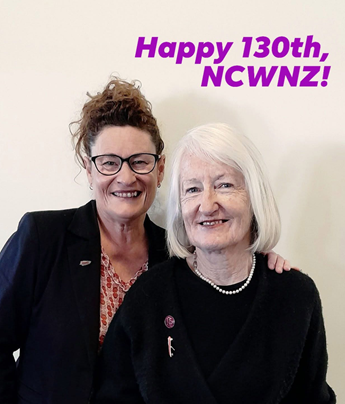 Whanganui had a successful lunch celebrating 130 years of NCWNZ at the end of May. We had 40 women attend, including a group from the Palmerston North branch.
Suzanne Manning accompanied by Emma, a NCWNZ intern, were our guests. Unfortunately on their way from Wellington to Whanganui, they came across a serious car accident which blocked the road and access north. This however did not deter them. They found the Otaki Library and set up their laptops there. With help from some IT savvy women at our end, we were able to see and hear Suzanne on our large screen.
Susanne pulled out some interesting findings from the Gender Attitudes survey done last year, noting that attitudes towards women were not getting better but neither were they getting worse. However, there was a small group of young males with concerning attitudes. Suzanne expressed optimism that this group was small and that generally we should be positive about the young men growing up in New Zealand. We all have a role to call out misogyny when we see it and encourage robust discussions with the young men we come across.
We have had positive feedback from the women who attended and as result we have had two new members.
By
Jenny Saywood
President, NCWNZ Whanganui Branch
NCWNZ Action Hubs
The New Zealand (NZ) Salvation Army State of the Nation Report 2026 makes sombre reading. One statistic, unfortunately, a recurring theme, is that gender-based violence (GBV), in particular intimate partner violence (IPV) against women by men was at its highest since at least 2018. Estimates suggest nearly one in three NZ women experience forms of intimate partner violence (IPV), family violence (FV), and/or sexual violence (SV) over their lifetimes and, at the extreme, femicide (death resulting from GBV). In a shadow report to the UN (August 2024) submitted by the Coalition for the Safety of Women and Children for CEDAW examination, our high rate of GBV, is identified as a violation of women’s human rights. As such, GBV is not simply a problem of a few individual errant men, states and institutions are also liable. It is evident that much of the global point-in-time survey data on GBV, IPV and SV tends to focus on and target strategies towards the 15–49 age range. This is also the case in NZ. But what are the possible effects and manifestations of IPV on the lives of older women 50+ years of age? Using our EIAH lens, we argue that financial and economic abuse and its cumulative effect is one such manifestation of gendered abuse. This often-invisible form of abuse has significant consequences for older women 50+ in Aotearoa New Zealand.
Data collection on gender-based abuse is plagued by significant underreporting, compounded by existing datasets overlooking the experiences of specific groups of women (i.e. older, disabled, migrant women and those in rainbow communities). Confusion over terms (i.e., family, intimate partner, relationship, domestic, violence, abuse, family harm) and influential myth-making imagery (IPV is caused by ‘something else’), shape public perception and reinforce GBV as an interpersonal offence for which only individual perpetrators (statistically men) are liable. Further, Claudia Mahler, Independent Expert for the UN Human Rights Council, noted in her report (17 July 2021) how the umbrella term ‘elder abuse’ distracted attention away from IPV in later years (women 65+) which is often a continuation of abuse lasting many years or even decades. No matter what term is used or the goals of the second phase of the whole of government Te Aorerekura strategy (2025-2030), action on all forms of GBV tends to be ad hoc, reactive, and incident-based responses by siloed, state agencies and under-resourced, over-whelmed, community organisations. IPV is however, a symptom of deeper systemic, gendered, social, political and economic inequalities. This broader contextual, multi-layered system, is best identified as a form of social entrapment.
Financial and economic abuse as a form of IPV, is not well understood, and is often seen as an unfortunate/inevitable outcome of other abuse. The Domestic Violence Act (2018, s11(e)) lists economic and financial abuse as a subcategory under psychological violence. Arguably, given its distinctiveness and dire, long-term consequences it should be understood as a standalone form of violence. NZ researcher Alisha Scott (2023) defines financial abuse as “a behaviour that restricts, controls, exploits or removes another person’s access to money, economic resources, or participation in financial decisions” whereas economic abuse “takes a wider view including housing, employment and education”. Both are intertwined with wealth and wealth inequality, intensified by for example, inequities in the labour market, traditional gender roles, the gender pay gap, sexism, divorce (i.e., particularly when later in life), and perhaps, a reticence to openly talk about money.
Importantly, neither financial and/or economic abuse is as observable as physical abuse, nor does it require the perpetrator to be physically present. Harmful behaviours can hide behind our complex financial institutions (e.g., banks, specialist lenders), a situation not helped by a shrinking number of physical banks, online banking platforms, policies and practices of lending institutions including government agencies, our slow and costly legal system (e.g., Family and Criminal Court processes, limited legal aid), and for some, navigating unfamiliar, intrusive, siloed government social service agencies.
The following abridged extract taken from an interview with Patrica (pseudonym), illustrates some of the manifestations and cumulative effect of financial and economic abuse women 50+ years of age can face.
Patricia jokingly recalls the shock and unexpectedness of her partner’s leaving for a younger woman; it was the turning point that saw her status change to ‘single solo mum’, after a messy divorce and altered the trajectory of her later years. The future she had taken for granted was gone. She spoke of feelings of betrayal, grief, humiliation, stupidity and naivety. She had just been too busy dealing with paid work and the endless demands of parenting. The realization that for years she had been making excuses for him, his ego-driven schemes and excessive spending on non-essential items. The signs were there, such as an endless stream of overdue notices on basic household bills but she chose to believe his assurances “all was fine”. What else could she do? It was the loss of their jointly owned home that she had initially financed that hit the hardest. Unbeknown to her, it had been heavily mortgaged, an accumulation of loans over time that she had not really thought about or been consulted on. Bank accounts were virtually empty – so the house had to be sold to repay creditors and bank debt. It all took time to untangle, but in the end, there was little left, she simply had to move on and learn to deal with whatever unfolded.
Forced into the private rental market, navigating what she termed humiliating government agencies to access any financial support, she worked two, at times three part-time jobs to support herself and her children. Juggling finances meant years of tight budgeting, as her children transitioned into adulthood and finally, left home. Now alone, she shifted geographic locations, but as a single, older woman facing unaffordable private market rents, she gratefully accepted offers to live with members of her family. Similarly, employment, she was just happy to get jobs ‘at her age’, with few formal qualifications, in female dominated, low wage, private sector industries. She was now over 65 years of age. She saw herself as a hard, loyal worker, but with every restructuring she feared losing her job. She had minimal savings in KiwiSaver so was increasingly aware of her precarity. She had to keep working. Trying to be optimistic, she struggled to look beyond the present. It was too hard to even imagine what her future might look like.
Patricia’s abridged story raises multiple questions. For one, it asks us to reflect on the economic interdependence of marital/de-facto relationships and how systems (e.g., legislation; Family Court processes) and the underlying assumptions (e.g., the expectation of a female partner’s unpaid labour; that fairness, respect and trust are the basis of relationships) reinforce this interdependence. Were there elements of coercion and controlling behaviours that led to Patricia to devolve all financial matters to her partner? Financial and economic abuse is not a criminal offence. As with other forms of GBV, including elder abuse (see NCWNZ submission on Violence Against Older Women), it is not seen as a human rights issue that government agencies and wider society has a duty to address. It is left to individuals in the domestic private space to firstly recognise as a form of abuse and then try to resolve. The principles of the Family Violence Act (2018) Act state:
- family violence, in all its forms is unacceptable;
- decision makers should, whenever appropriate, recognise that family violence is often behaviour that appears to be minor or trivial when viewed in isolation, but forms part of a pattern of behaviour that causes cumulative harm:
- decision makers should, whenever appropriate, recognise that family violence often is or includes coercive or controlling behaviour.
Such principles were not useful as Patricia negotiated the ongoing cumulative harm of her partner’s financial and economic abuse. Banks are unique and powerful institutions both at the societal level and within households. Victim – survivors and their abusers are likely to both be customers. Like all involved at the customer interface (including lawyers and Judges), bank staff are not immune to bias and manipulation. This places the onus on banks and other financial lenders to be vigilant to help mitigate the possibility of further harm. Today, advocacy organisations such as Good Shepherd NZ are working closely with the New Zealand Banking Association and the Financial Services Association to develop codes of practice and raise awareness among their staff to be alert for possible signs of financial and economic abuse. Now and into the future, we can only hope that a pattern of loans initiated by one partner accruing on jointly owned property, persistent overdrafts and drained joint accounts would trigger a timely response by banking staff.
Underlying Patricia’ s story are the themes of disbelief and a breach of trust by an intimate partner and her account of the consequences of this abuse as she has aged. Traversing time, her story shows how financial and economic abuse is a mechanism of social entrapment, a model that gives an often-invisible insight into the gendered, social, political and economic inequalities women aged 50+ face as they age. Their capacity to make provision for later life, the length of which is unknown, can be greatly reduced in comparison to that of perhaps, their abusive male partner. New Zealand Superannuation does ensure all female recipients at age 65 have a secure, known and individual source of income regardless of wealth and relationship status. However, as argued in the NCWNZ submission to the Retirement Commission, a rising number of older single women, living alone in private rentals are increasingly prone to income poverty and hardship. How the cumulative impact of financial and economic abuse shapes the futures of women 50+ years of age remains critically under- appreciated and under researched. It is a human rights issue that must no longer be silenced.
Resources:
- ‘Alternative Report for CEDAW examination for the ninth periodic report of New Zealand (89th Session), Submitted by The Coalition for the Safety of Women and Children,’ OHCHR (August 2024):
https://tbinternet.ohchr.org/_layouts/15/treatybodyexternal/Download.aspx?symbolno=INT%2FCEDAW%2FCSS%2FNZL%2F59562&Lang=en - ‘Breaking the Cycle of Violence: Te Aorerekura Action Plan (2025-2030),’ Centre for Family Violence and Sexual Violence Prevention, New Zealand Government: https://preventfvsv.govt.nz/assets/Uploads/Second-Te-Aorerekura-Action-Plan.pdf.
- Brittany Goodwin, ‘Barriers to exit: How financial barriers prevent women from leaving abusive relationships,’ (July 2025), Good Shepherd New Zealand :
https://goodshepherd.org.nz/wp-content/uploads/2025/07/PubsandInsights-report-financial-barriers-to-exit-paper_2025.07.07.pdf. - ‘Long-term impacts of family violence economic abuse,’ (March 2025) Good Shepherd New Zealand: https://goodshepherd.org.nz/wp-content/uploads/2025/04/PubandInsights-Long-term-impacts-of-economic-abuse-2025.04.10.pdf.
- Claudia Mahler, ‘Human rights of older women: the intersection between ageing and gender’' United Nations Human Rights Thematic Report A/76/157 (17 July 2021): https://www.ohchr.org/en/documents/thematic-reports/report-intersection-ageing-gender.
- ‘Coercive control and entrapment,’ Shine blog (20 June 2025):
https://2shine.org.nz/about-us/blogs/coercive-control-and-entrapment. - ‘Response from the National Council of Women of New Zealand to the Special Rapporteur on Violence against Women and Girls: Violence Against Older Women’ (9 April 2026), NCWNZ Submissions:
https://assets.nationbuilder.com/ncwnz/pages/1026/attachments/original/1776291188/S26.02_OHCHR_Violence_Against_Older_Women.pdf?1776291188. - Ayesha Scott, ‘Financial Abuse in a Banking Context: Why and How Financial Institutions can Respond,’ Journal of Business Ethics (2 June 2023),1-16:
https://pubmed.ncbi.nlm.nih.gov/37359798/.
By
Irene Ryan, Economic Independence Action Hub
with Rosemary du Plessis
With many thanks for contributions from Action Hubs and Branches, the Influence & Decision-making Hub has collated questions for NCWNZ to consider and put to the parliamentary candidates in time for voting in the upcoming elections. The Hub will submit to the NCWNZ Board a condensed list of questions organised by topic themes for the party spokesperson to focus on. Then the questions will be sent under cover of a letter from Suzanne Manning as president. This process is similar to the one undertaken by the Hub in 2023 (see more on this at the press release issued on August 30, 2023, at https://www.ncwnz.org.nz/surveyresults).
There's been a massive effort from all those involved in the submissions process resulting in five submissions lodged this month. These are publically available on the NCWNZ website at Submissions - National Council of Women of New Zealand.
Deepfake Digital Harm & Exploitation Bill - S26.07 Deepfake Digital Harm and Exploitation Bill
Online safety, including safety for women and children, is a key concern for NCWNZ members. The Bill is too narrow in scope and will merely amend a broken legislative and regulatory environment. There are gender-specific risks and dangers with the current unregulated online environment, and the failure to keep up with our counterparts. We outline a number of law reform and programming recommendations to help ensure that everyone is safer online.
Overseas Adoption Legislation Bill - S26.08 Overseas Adoption Legislation Bill
NCWNZ believes this is a critically important Bill that aims to protect some of the most vulnerable children. However, it also risks unintended consequences, among which is the denial – particularly to Pasifika children – of the opportunity for a loving, safe family/kinship-based home in New Zealand.
Legislation (Definitions of Woman and Man) Amendment Bill - S26.10 Legislation (Definitions of Woman and Man) Amendment Bill
NCWNZ opposes the Bill in the strongest possible terms and requests that it is immediately withdrawn. The Bill does not meet the Crown’s obligations of protection in Te Tiriti o Waitangi, contradicts current legislation in Aotearoa New Zealand, and does not align with international treaties and Conventions to which New Zealand is a signatory. NCWNZ condemns the attack on the rainbow community inherent in the Bill. We find the lack of reference to individuals with innate variations of sex characteristics and to gender fluidity present in cultural practice to be deeply disquieting
Summary Offences (Move-on Orders) Amendment Bill - S26.09 Summary Offences (Move-On Orders) Amendment Bill
NCWNZ believes that people experiencing homelessness, poverty, violence, addiction, mental distress, and social exclusion are members of the public, and have a right to safety, dignity, housing, and protection. This Bill does not centre that reality. Homelessness does not disappear because it is moved from sight. Suffering does not disappear because it occurs somewhere else.
Conservation Amendment Bill - S26.11 Conservation Amendment Bill
NCWNZ believe that the Bill, as currently drafted, is deeply flawed. We recommend that the Bill be withdrawn. It needs to be substantially redrafted to reaffirm the primacy of conservation, protect public conservation land from disposal or inappropriate use, uphold democratic and Treaty obligations, and recognise the critical role conservation plays in the wellbeing of women, families, and communities.
Also, in May the Submissions Coordination team ran an introduction to the submissions process. You can find the 40-minute recording here Submissions Webinar 2026 - Google Drive.
If you are interested in joining the submission writing team please contact Julie Thomas, [email protected].
Resources to share in meetings and with your networks
Information about the new laws and police training regarding stalking crimes from the Coalition for the Safety of Women and Children
Leonie Morris talking about the new anti-stalking laws on RNZ’s Morning Report.
https://www.rnz.co.nz/national/programmes/morningreport/audio/2019036582/new-anti-stalking-laws-come-into-effect
Carrie Leonetti interviewed by Jessie Mulligan:
https://www.rnz.co.nz/national/programmes/afternoons/audio/2019036979/explainer-stalking-becomes-a-crime-what-does-that-mean
Radio NZ also put together a great programme on the Detail: ‘The New Crime of Stalking’ (May 26 2026) available here: https://www.rnz.co.nz/podcast/the-detail

Economist Susan St John has published a new article exploring the debate around public debt, government spending, and the choices being made in Budget 2026. You can read St John’s article here: https://susanstjohn.substack.com/p/what-is-the-real-crisis-public-debt
‘What is the real crisis: public debt, or private destitution along with rampant child poverty? The budget ignores child poverty and lets us all down,’
Susan’s Substack (2 June 2026)
St John challenges common assumptions about government debt and asks what the real costs are when essential investments in children, families, housing, health, and social support are deferred.
The Guilty Feminist, an award-winning podcast and live show hosted by Deborah Frances-White, recently broadcast ‘Girls’ Rights Are Human Rights’ with Claire Mahon and Julia Rowland of the Global Human Rights Group. See more at https://guiltyfeminist.com/episode/?episode=738.
from Instragram @nzeiteriuroa (6 May 2026)
NZEI Te Riu Roa has joined a coalition of affected workers and unions to lodge a formal complaint with the United Nations against the New Zealand Government for dismantling pay equity progress last year. The complaint to the UN Committee on the Elimination of Discrimination against Women (CEDAW) marks a major escalation in the fight for pay equity. Joining the claim are NZEI Te Riu Roa members Ally Kingi (Teacher Aid) and Mel Burgess (ECE Teacher), two of the four individuals taking their case to the international stage alongside the Pay Equity Coalition Aotearoa. By involving the UN, the complainants are seeking global accountability for what they describe as a direct assault on the rights of women workers in New Zealand.
[N.B. You can download the report from the Human Rights Commission website at https://tikatangata.org.nz/cms/assets/Documents/General/Pay-Equity/Report-Complaint-under-CEDAW-final.pdf.]
Gender Equality in Foreign Policy report from the International Center for Research on Women:
... The analysis reveals persistent gaps between commitment and practice across all seven domains. This is most visible in the peace and militarization pillar, where countries continue to endorse international norms while maintaining military spending and arms export practices that undermine them—suggesting that for some governments, engagement with gender equality norms functions as diplomatic signaling rather than a driver of policy coherence. Countries with declared feminist foreign policies do not show up as consistently strong performers when evaluated across the full range of structural domains the Index covers, suggesting that current feminist foreign policy frameworks often leave key structural drivers of inequality under addressed. Where countries score highly on institutional legacy alone, the Index also reflects a methodological reality—formal commitments are more readily captured than erosion, contradiction, or failure to challenge deeper structural inequalities. ... The Index identifies six priorities:
- Close the rhetoric-to-resources gap—establish binding targets for gender-targeted ODA and prioritize direct funding to women’s rights organizations.
- Strengthen accountability and implementation—move existing frameworks from ratification to funded, monitored action across labor, migration, and security.
- Use frameworks more strategically—conduct gender impact assessments of trade and investment agreements and use normative frameworks as entry points toward binding standards.
- Address militarization—recommit to disarmament frameworks, strengthen arms export controls, and redirect defense resources toward human security.
- Build cross-sectoral coalitions—connect gender equality advocacy to live negotiations on tax, trade, climate, and security.
- Invest in better measurement—develop behavioral and implementation-sensitive indicators that capture whether commitments translate into material change.
Caroline Ferraz Ignacio, Aapta Garg, and Foteini Papagioti, ‘Gender Equality in Foreign Policy Index 2026,’ ICRW Network (April 2026), https://www.icrw.org/wp-content/uploads/2026/04/Gender-Equality-In-Foreign-Policy.pdf.
Readings to consider
Purva Singh (Bhagwani Consultancy), Women's Rights as Human Rights: The Enforcement Deficit, Compelled Marriage and the Case for Domestic Reform and International Accountability in India (8 June 2026). Available at SSRN: https://ssrn.com/abstract=6899599
Abstract
Gender-based violence against women in India persists at a high level despite a statutory framework that is, on its face, among the most protective in the world. This article argues that the deficit lies not in the law on paper but in its enforcement, and that the failure must be understood as a human-rights failure affecting half the population rather than a private or domestic misfortune. Drawing on the feminist critique of the public/private distinction developed by Charlesworth and Chinkin and on Fareda Banda's comparative analysis of the interaction of human-rights norms with custom in the regulation of family life, and situating the analysis within the principle that women's rights are human rights, affirmed at Vienna in 1993 and given content by CEDAW and its General Recommendations, it reads the Indian constitutional guarantees of equality and personal liberty against the criminal and matrimonial law of dowry, cruelty and marital sexual autonomy. It then develops a structural claim: that the constitutionally protected right to choose whether and whom to marry has become, for most women, practically unavailable, because social ostracisation, physical insecurity and financial dependence rooted in unequal inheritance practice render marriage effectively compulsory. That compulsion is what exposes half the population to the risk of dowry violence. Because that dependence is in turn rooted in women's constrained economic agency, the article argues that financial independence, and the statistical recognition of women's paid and unpaid labour, is the precondition that makes the formal rights real. The article contends that India should accede to the Optional Protocol to CEDAW, restoring mechanisms available to women in States such as Mexico, and that the gravity of the situation warrants exploring complementary external avenues, provided any such scrutiny is participatory, intersectional and oriented to reform rather than spectacle. It engages directly with the principal objections raised against this position, the alleged misuse of protective laws and the claim that women's empowerment threatens the family, and argues that the evidence commonly cited for misuse in fact reflects the same enforcement failure the article diagnoses.
More women in China are rejecting state pressure over their reproductive choices, amid the legacy of the one-child policy. In a four-part series, the Guardian analysed the changing status of women across Chinese society. The series examines how women are responding to government restrictions and shifting social and economic conditions, in different aspects of their lives. Read Amy Hawkins, ‘China has long sought to control women’s bodies. Increasingly, they’re making their own choices,’ The Guardian (12 June 2026), https://www.theguardian.com/world/2026/jun/12/china-has-long-sought-to-control-womens-bodies-increasingly-theyre-making-their-own-choices.
The Guardian published an account about Kawthar Bashar al-Husayjawi, a 15-year-old girl who was killed by family members in Iraq after refusing to marry her cousin.
Anonymous, ‘My 15-year-old relative was killed for refusing to marry her cousin. My family celebrated by dancing in the street,’ The Guardian (1 June 2026), https://www.theguardian.com/global-development/2026/jun/01/kawthar-al-husayjawi-killed-refusing-forced-marriage-marry-family-celebrated-iraq.
Katerina Porter et al., 'From Enforcement to Intervention: A Whole-System, Multi-Agency Model for Addressing Stalking in Hampshire and Isle of Wight' (June 23, 2026). Available at SSRN: https://ssrn.com/abstract=6980920
This nineteen-page document was written by members of the MASP evaluation team at the University of Southampton. It was co-produced through the Hampshire and Isle of Wight Multi-Agency Stalking Partnership (MASP), with contributions from partner organisations including Hampshire and Isle of Wight Constabulary, Hampshire and Isle of Wight Healthcare NHS Foundation Trust, Hampshire and Isle of Wight Office of the Police & Crime Commissioner, STOP Domestic Abuse, South Central Probation Region (His Majesty’s Prison and Probation Service), and the University of Southampton (MASP Evaluation Team).
Abstract
Background: Stalking is a high-harm form of interpersonal violence associated with significant psychological, social, and safety impacts. Responses have historically been fragmented, with criminal justice, health, and victim/survivor support services often operating in parallel rather than in coordination. Multi-agency approaches to stalking are emerging, but little has been written about how psychological intervention, civil preventative powers, and victim/survivor advocacy can be integrated within routine public protection arrangements.
Aim: To describe the development and implementation of the Hampshire and Isle of Wight (HIOW) Multi-Agency Stalking Partnership (MASP) as a whole-system model for responding to stalking.
Methods: This descriptive paper outlines the rationale, governance arrangements, operational mechanisms, and core delivery components of the MASP model, drawing on service documentation and practice experience. Results: The MASP integrates police, probation, health, and specialist victim/survivor advocacy services within a coordinated framework. Core components include weekly and monthly multi-agency clinics, information-sharing arrangements, psychologist-led specialist interventions, psychiatric input, specialist victim/survivor advocacy, and the use of civil preventative powers such as Stalking Protection Orders. The model embeds behavioural intervention within ongoing risk management and public protection processes.
Conclusions: The MASP provides a practical example of how whole-system responses to stalking can be operationalised in practice. By aligning enforcement, behavioural intervention, and victim/survivor advocacy within a single partnership framework, the model extends existing approaches beyond information sharing alone. Continued evaluation is needed to strengthen the evidence base and support the refinement and sustainability of coordinated multi-agency responses to stalking.
Stories to celebrate
NZ Youth Week 2026 (https://www.arataiohi.org.nz/youth-week) ran nationwide from May 18 to May 24, 2026. The festival celebrated the contributions of young people (aged 12 to 24) with a strong focus on self-expression, creativity, and civic engagement. The official theme for the week was: 'Our voices matter! We deserve to be heard | Taringa whakarongo! Ki te reo o ngā taiohi.' Listen now to the waiata, Revolution, created by youth from Tāmaki Makaurau to mark Youth Week 2026. AKL MADZ (Pākehā, Indian) led the production and creative direction. TY (Ngāti Whātua ki Kaipara), vocals, and BRDG3 (Samoan, Cook Island, Indian) with spoken word and rap: https://www.arataiohi.org.nz/youth-week/waiata.

Fiona McConnochie, a former lawyer in Nelson, believes that the more time she spent alone outdoors, the more comfortable she was with tramping on her own and exploring the outdoors. She wants to help other women get accustomed to the feeling of being by themselves in the New Zealand bush. Check out the Facebook group called Wāhine Tramping and Hiking NZ. Read Rebekah White, ‘Woman Alone: The hard, heavy work of not feeling scared in the bush—and why we persist,’ New Zealand Geographic (May-June 2026), https://www.nzgeo.com/stories/woman-alone/.
from Beryl Anderson
The Solomon Islands Cabinet has endorsed the Solomon Islands Government Temporary Special Measures (TSM) Taskforce to strengthen women’s political participation and representation in Provincial Assemblies. The Solomon Islands National Council of Women is one of the organisations working to address the systemic under-representation of women in Provincial Assemblies. See more at 'TSM task force established to advance women’s political participation,' Solomon Star News (20 May 2026), https://www.solomonstarnews.com/tsm-task-force-established-to-advance-womens-political-participation/.
On He Rerehua, disability rights champion Huhana Hickey shares her journey, reflecting on the challenges she has faced, the barriers she has fought to remove, and her unwavering commitment to creating a more inclusive Aotearoa. For decades, Hickey has been a powerful voice for accessibility, independent living, Māori with disabilities, and the right for all people to participate fully in society. Her story is one of resilience, leadership and determination to leave a better future for the generations that follow. Read the full story at Waatea News:
https://waateanews.com/2026/06/25/he-rerehua-huhana-hickeys-lifelong-fight-for-inclusion-and-dignity/.
Dates to note for July 2026
4th – 19th July: Māori new year and Matariki Festival (see more at https://www.matarikifestival.org.nz/). Matariki is a time for remembrance, celebrating the present, and looking to the future. The official public holiday falls on Friday, 17 July (observed on the Friday closest to the lunar cycle).
6 July: World Rural Development Day
11 July: World Population Day
12 July: International Day of Hope
15 July: World Youth Skills Day
25 July: International Day for Women and Girls of African Descent
30 July: World Day Against Trafficking in Persons - this year’s theme ‘Trapped Behind the Scam’ highlights the growing phenomenon of human trafficking for forced criminality within online scam operations, e.g., fake job advertisements. See more at https://www.un.org/en/observances/end-human-trafficking-day.
Quotation to ponder
Insofar as heterosexual gender norms produce inapproximable ideals, heterosexuality can be said to operate through the regulated production of hyperbolic versions of 'man' and 'woman'. These are for the most part compulsory performances, ones which none of us choose, but which each of us is forced to negotiate. I write 'forced to negotiate' because the compulsory character of these norms does not always make them efficacious. Such norms are continually haunted by their own inefficacy; hence, the anxiously repeated effort to install and augment their jurisdiction.
– Judith Butler, Bodies That Matter: On the Discursive Limits of 'Sex' (1993), p. 257.
Whakataukī to share
Kua tawhiti kē to haerenga mai, kia kore e haere tonu. He nui rawa o mahi, kia kore e mahi tonu.
You have come too far not to go further, you have done too much, to not do more.
This saying was from Tā Himi Henare (Ngā Puhi, Ngāti Whatua) also known as Sir James Henare, when in 1988 he presented the Māori Language Petition to parliament. As a whakatauākī the quote emphasises the importance of continuing progress and striving for more even in the face of challenges. It calls for resilience and for us to pursue improvement in our lives. See more about Sir James at https://www.jhrc.auckland.ac.nz/sir-james-henare/.
-=-=--=-=-
The Circular is the official newsletter of The National Council of Women of New Zealand. Archived copies are available at the National Library of New Zealand (ISSN 2815-8644).
Do you have some news to share? Please send an email to the newsletter managing editor, Randolph Hollingsworth, at [email protected].